- 3/8, North Pirerbag
- 60 Feet Main Road
- Mirpur, Dhaka 1216
- +880-967-8247365
- support@informatix.systems

Cyber Threat Intelligence Lifecycle Explained Step by Step
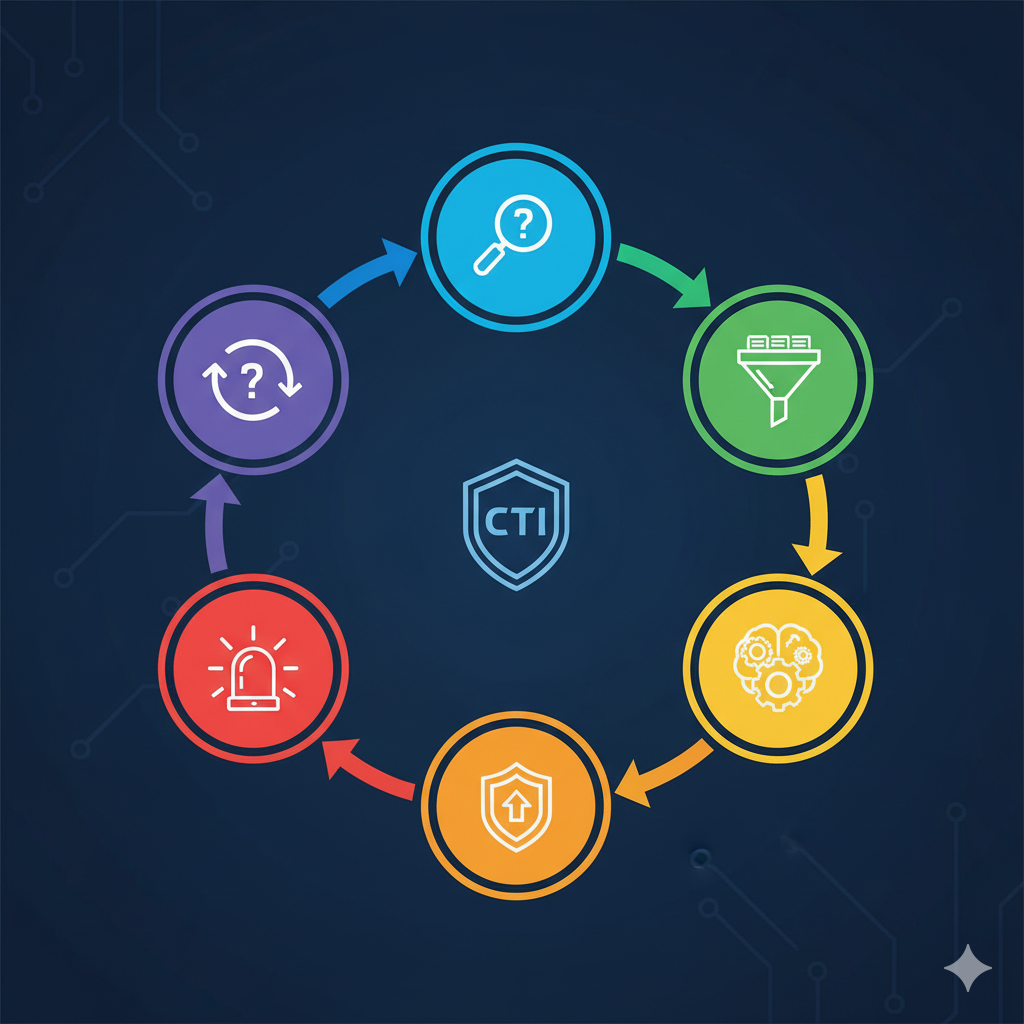
In today's hyper-connected digital landscape, cyber threats evolve at an unprecedented pace, driven by sophisticated actors leveraging AI, geopolitical tensions, and supply chain vulnerabilities. The cyber threat intelligence lifecycle serves as the foundational framework for organizations to systematically collect, analyze, and act on threat data, transforming raw information into actionable insights that prevent breaches and minimize damage. This iterative process, typically comprising six core phases: Planning & Direction, Collection, Processing, Analysis, Dissemination, and Feedback, ensures cybersecurity teams stay ahead of adversaries targeting enterprises with ransomware, phishing, and advanced persistent threats (APTs). For enterprise leaders, mastering the cyber threat intelligence lifecycle is not optional; it's a business imperative. According to industry reports, organizations with mature threat intelligence programs reduce breach detection times by up to 50% and cut response costs significantly. In 2026, as generative AI amplifies attack sophistication, enabling deepfake phishing and automated exploits, businesses face heightened risks to critical assets like cloud infrastructure and customer data. Effective CTI lifecycle implementation aligns security operations with strategic goals, enabling proactive defense rather than reactive firefighting at Informatix.Systems, we provide cutting-edge AI, Cloud, and DevOps solutions for enterprise digital transformation, helping clients operationalize the cyber threat intelligence lifecycle through integrated platforms that automate data flows and enhance analyst efficiency. This comprehensive guide breaks down each step with practical examples, frameworks like the Diamond Model and MITRE ATT&CK, and 2026-focused best practices. Whether you're building a CTI program from scratch or optimizing an existing one, understanding this lifecycle empowers your organization to navigate the complex threat landscape with confidence.
Planning and Direction
The cyber threat intelligence lifecycle begins with Planning and Direction, where organizations define clear objectives and Priority Intelligence Requirements (PIRs). This phase sets the scope by identifying what intelligence matters most, such as specific threat actors, industries, or assets like cloud environments.
Defining PIRs and EEIs
- PIRs focus on high-level needs, e.g., What ransomware groups target financial sectors?
- Essential Elements of Information (EEIs) drill down into actionable questions, like Which IoCs are linked to LockBit variants?
Organizations prioritize based on business impact, using risk assessments to avoid resource waste on irrelevant data.
Stakeholder Alignment
Engage CISOs, SOC teams, and executives early. Tools like threat modeling workshops ensure alignment, preventing siloed efforts. Best practice: Document PIRs in a living roadmap updated quarterly.At Informatix.Systems, our AI-driven planning tools automate PIR prioritization, integrating with DevOps pipelines for seamless enterprise adoption.
Collection
The collection gathers raw data from diverse sources to fulfill planning requirements. This phase demands a multi-source strategy to capture comprehensive threat signals.
Internal vs. External Sources
- Internal: Logs, SIEM alerts, endpoint data.
- External: OSINT (dark web forums), ISACs, commercial feeds like Recorded Future.
In 2026, AI agents will dominate collection, scraping the deep/dark web for real-time IoCs.
Collection Best Practices
- Automate feeds via APIs to reduce manual effort.
- Validate sources for reliability, focus on high-confidence providers.
- Balance volume with relevance to avoid overload.
Challenges include data overload; mitigate with automated triage.
Processing and Exploitation
Raw data from collection is messy, with duplicates, inconsistencies, and noise abound. Processing cleans, normalizes, and enriches it for analysis.
Key Processing Steps
- Filtering: Remove irrelevant items using rulesets.
- Normalization: Standardize formats (e.g., STIX/TAXII).
- Enrichment: Add context via geolocation, WHOIS, or threat actor attribution.
AI excels here, using ML to deduplicate at scale and score confidence levels.
Tools and Automation
Popular platforms include Splunk, ELK Stack, and AI-enhanced tools like Mandiant's. Metric: Aim for 90% automation to boost efficiency.
Analysis and Production
Analysis transforms processed data into intelligence, identifying patterns, TTPs (Tactics, Techniques, Procedures), and predictions.
Types of Analysis
- Tactical: IoC hunting with MITRE ATT&CK mapping.
- Operational: Campaign reconstruction via Diamond Model.
- Strategic: Trend forecasting, e.g., AI-driven threats in 2026.
Use frameworks like the Diamond Model (Adversary-Infrastructure-Capability-Victim) for relational analysis.
Advanced Techniques
- Hypothesis testing: Validate assumptions against data.
- Predictive modeling: AI forecasts adversary shifts.
Case Study: A financial firm used analysis to preempt phishing, blocking 95% of attempts.
At Informatix.Systems, we provide cutting-edge AI, Cloud, and DevOps solutions for enterprise digital transformation, embedding analysis into SOC workflows.
Dissemination and Integration
Actionable intelligence must reach the right people in usable formats. Dissemination tailors reports for stakeholders.
Delivery Formats
| Audience | Format | Example Content |
|---|---|---|
| SOC Analysts | Alerts/Dashboards | IoCs, ATT&CK mappings |
| Executives | Executive Summaries | Risk scores, business impact |
| Incident Response | Playbooks | Step-by-step mitigation |
Integration Best Practices
- Push to SIEM, EDR via APIs.
- Use SOAR for automated playbooks.
- Ensure timeliness, real-time for tactical intel.
Feedback and Evaluation
The lifecycle closes with Feedback, refining future cycles based on outcomes.
KPIs and Metrics
- MTTR reduction: Track response time pre/post-CTI.
- False positive rate: <10% target.
- Incidents prevented: Correlate intel to blocks.
Tools like dashboards measure ROI, e.g., FTE efficiency gains.
Continuous Improvement
Conduct post-mortems; adjust PIRs quarterly. In 2026, AI feedback loops will automate this.
Key Frameworks in CTI Lifecycle
Frameworks enhance lifecycle efficacy.
MITRE ATT&CK Framework
Maps adversary behaviors across 14 tactics. Use for detection gaps and threat hunting.
Diamond Model of Intrusion Analysis
Relates four elements for holistic pivoting. Ideal for incident response.
Integrating AI into the CTI Lifecycle
AI revolutionizes every phase in 2026.
- Collection: Autonomous OSINT scraping.
- Analysis: Pattern detection, attribution.
- Dissemination: Personalized alerts.
Benefits: 3x faster detection, reduced analyst fatigue.
Real-World Case Studies
- Healthcare Ransomware Mitigation: CTI profiled actors, enabling early blocks.
- Energy Sector Defense: Lifecycle integration protected infrastructure.
These demonstrate 50-70% risk reduction.
Best Practices for 2026
- Adopt unified platforms for data fusion.
- Prioritize CEM and Zero Trust.
- Train on AI threats like deepfakes.
At Informatix.Systems, we provide cutting-edge AI, Cloud, and DevOps solutions for enterprise digital transformation.
Challenges and Solutions
Common pitfalls: Data silos, skill gaps.
Solutions:
Future Trends in CTI
2026 predictions: AI agents, quantum threats, geopolitical surges. Proactive intel will define resilience. The cyber threat intelligence lifecycle provides a structured path to cybersecurity maturity, turning chaos into control across its six phases. By integrating frameworks, AI, and feedback, enterprises achieve proactive defense, slashing risks and costs. Ready to fortify your operations? Contact Informatix.Systems today for tailored AI, Cloud, and DevOps solutions. Schedule a free consultation at https://informatix.systems and step ahead of threats in 2026.
FAQs
What is the cyber threat intelligence lifecycle?
A six-phase iterative process: Planning, Collection, Processing, Analysis, Dissemination, and Feedback.
Why is planning the first phase?
It ensures focused, relevant intel aligned to business needs.
How does AI enhance the CTI lifecycle?
Automates collection, analysis, and prediction for speed and scale.
What are key CTI metrics?
MTTR, false positives, and incidents prevented.
How does MITRE ATT&CK fit the lifecycle?
Supports analysis and dissemination via TTP mapping.
What are the 2026 CTI trends?
GenAI threats, continuous monitoring, predictive intel.
Can small enterprises implement CTI?
Yes, via commercial feeds and MSSPs like Informatix.Systems.
How to measure CTI ROI?
Track efficiency gains, breaches avoided.
No posts found
Write a review