- 3/8, North Pirerbag
- 60 Feet Main Road
- Mirpur, Dhaka 1216
- +880-967-8247365
- support@informatix.systems

Emerging AI Models for Predictive Cyber Defense Strategies 2028
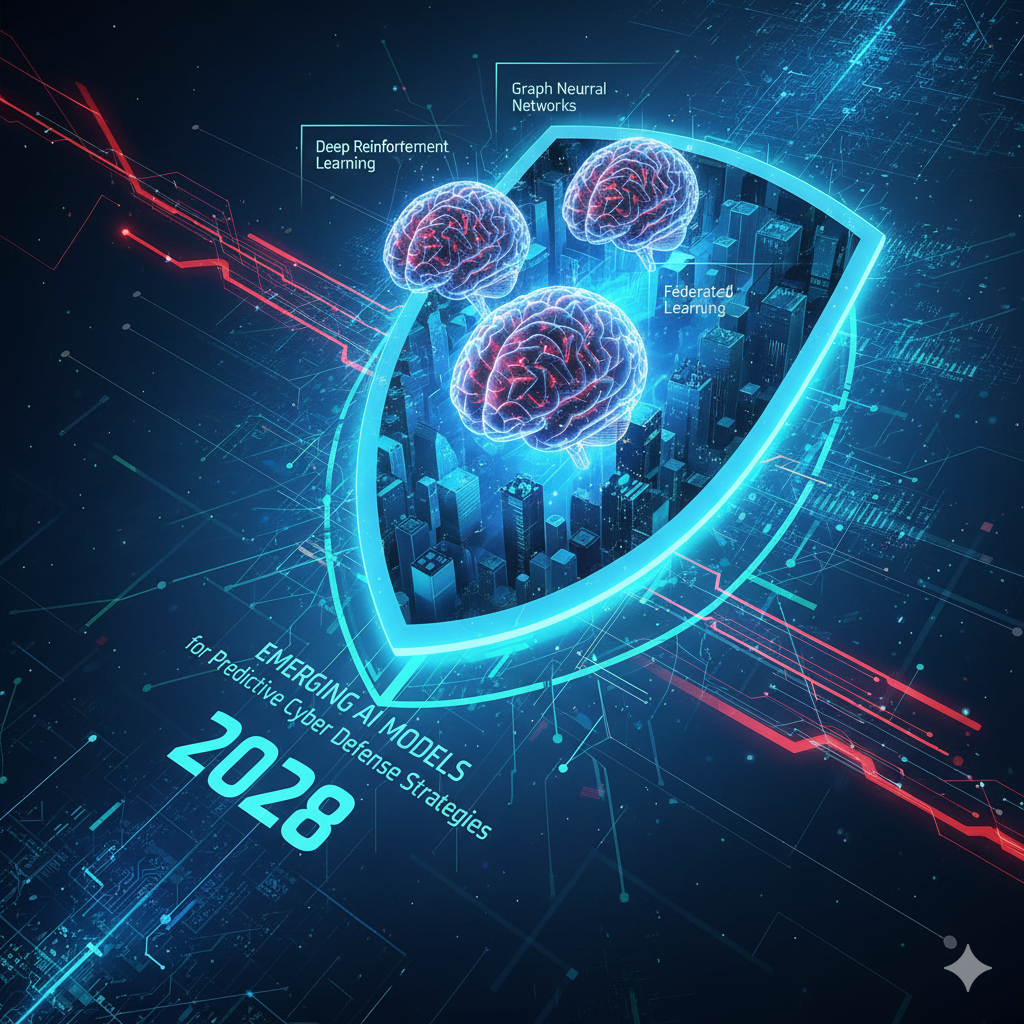
In today’s hyperconnected world, enterprises face unprecedented cyber threats evolving at rapid speeds. As organizations digitize core operations and expand cloud adoption, the attack surface grows exponentially, demanding advanced security frameworks. Predictive cyber defense strategies powered by artificial intelligence (AI) have emerged as a game-changer in this battle, shifting the paradigm from reactive defense to proactive threat anticipation and mitigation. By 2028, AI models for predictive cyber defense are not just an advantage; they are a necessity for enterprises striving to maintain resilience, compliance, and customer trust. These AI models harness vast data streams, leveraging machine learning, deep learning, and anomaly detection algorithms to foresee potential breaches before they occur. Incorporating AI-driven cyber defense enhances real-time threat intelligence, automates incident response, and reduces costly security breaches at Informatix.Systems, we provide cutting-edge AI, Cloud, and DevOps solutions for enterprise digital transformation, enabling businesses to integrate the latest AI models into their cybersecurity infrastructure. Our expertise empowers enterprises to build predictive defense frameworks that adapt dynamically as cyber threats continue to evolve. This article explores the top emerging AI models for predictive cyber defense in 2028, their capabilities, and how enterprises can harness them effectively. If you want to future-proof your cybersecurity posture with AI, this comprehensive guide is for you.
Understanding Predictive Cyber Defense and AI Models
What is Predictive Cyber Defense?
Predictive cyber defense entails forecasting and mitigating cyber threats before they materialize into attacks. Unlike traditional reactive measures, this approach relies on intelligence gathering, behavioral analysis, and early-warning signals to preempt threats.
- Key benefits:
- Reduces breach impact
- Increases incident response speed
- Improves resource allocation
- Enhances regulatory compliance
Role of AI Models in Cybersecurity
AI models apply intelligent algorithms to synthesize data and identify patterns invisible to humans. For cyber defense, relevant AI models include:
- Machine Learning (ML)
- Deep Learning (DL)
- Natural Language Processing (NLP)
- Graph Neural Networks (GNN)
- Reinforcement Learning (RL)
These technologies enable automation of threat detection, response prioritization, and attack surface analysis.
Emerging AI Models Transforming Predictive Cyber Defense in 2028
Hybrid Deep Learning Networks
Deep learning models combined with traditional ML architectures provide layered analysis of network traffic and endpoint activity to increase detection accuracy of zero-day threats. These hybrid networks continuously learn and adapt.
Graph Neural Networks (GNN)
GNN models map relationships across network entities to identify suspicious lateral movements and insider threats more effectively. By understanding connection patterns, GNNs predict attack pathways.
Reinforcement Learning (RL) for Automated Defense
RL algorithms simulate adversarial attacks and learn optimal defense strategies autonomously. This dynamic learning enhances system resilience against unknown threats.
Natural Language Processing (NLP) for Threat Intelligence
NLP models extract actionable insights from diverse data sources like dark web forums, threat reports, and social media, enabling predictive analysis of emerging cyber risks.
Federated Learning for Privacy-Preserving Detection
Federated learning trains AI models across distributed datasets without exposing sensitive data, making collaborative cyber defense scalable and private.
Integrating AI Models into Enterprise Cyber Defense Frameworks
Designing Layered AI-Enabled Security Architecture
- Perimeter threat detection with AI-powered firewalls
- Endpoint behavioral analytics with ML models
- Network traffic anomaly detection via hybrid models
- Automated threat hunting with RL agents
- Threat intelligence aggregation using NLP
Best Practices for AI Model Deployment
- Continuous training with updated threat datasets
- Explainable AI (XAI) for transparency and auditability
- Integration with SIEM and SOAR platforms
- Regular performance evaluation and tuning
Challenges and Mitigation Strategies
- Data quality and bias management
- Balancing false positives/negatives
- Ensuring compliance with data privacy laws
- Addressing adversarial AI attacks
Key Technologies Enabling Predictive Cyber Defense AI Models
Cloud Computing and Edge AI
Cloud-native AI solutions provide scalable compute power and data access. Edge AI enables real-time threat detection close to data sources.
Big Data Analytics and Real-time Processing
Processing petabytes of security logs in real time empowers faster threat correlation and patterns discovery.
Explainable AI (XAI)
XAI models ensure cybersecurity decisions can be interpreted and justified by security teams.
AI-Driven Predictive Cyber Defense Successes
Financial Services Sector
- Deploying GNNs to detect fraudulent insider trading activities
- RL-based adaptive firewalls reduce breach response times by 60%
Healthcare Industry
- Hybrid deep learning for detecting ransomware intrusion attempts early
- NLP platforms aggregating dark web chatter on medical device vulnerabilities
Government and Critical Infrastructure
- Federated learning facilitates secure collaboration across agencies
- AI threat hunting, preventing nation-state-sponsored cyber incursions
Predictive Cyber Defense Metrics and ROI Analysis
Measuring the effectiveness of AI models involves:
- Detection accuracy and precision
- Mean time to detect (MTTD) and respond (MTTR)
- Reduction in successful breaches
- Cost savings on incident handling
- Compliance reporting improvements
Proper ROI tracking enables business justification for AI security investments.
Regulatory Environment and Ethical Considerations for AI in Cybersecurity
Data Privacy Regulations Impacting AI Models
- GDPR, CCPA, and local Bangladesh data laws govern data collection/use
- Federated learning helps address privacy concerns
Ethical AI Use in Cyber Defense
- Avoiding bias and discrimination in threat models
- Ensuring human oversight and accountability
Future Trends: What to Expect Beyond 2028
- Increased use of quantum AI models for cryptographic defenses
- Autonomous AI-driven Security Operations Centers (SOCs)
- Integration with 5G/6G network security protocols
- Enhanced cross-enterprise AI collaboration frameworks
How Informatix.Systems Empowers Enterprises with AI Cyber Defense
At Informatix.Systems, we provide cutting-edge AI, Cloud, and DevOps solutions for enterprise digital transformation. Our cybersecurity services include:
- Custom AI model development for predictive threat detection
- Cloud-native security operations with real-time AI analytics
- DevOps integration for continuous security monitoring
- Compliance and audit support with AI-powered reporting
Partner with us to future-proof your organization's cybersecurity with state-of-the-art AI technologies tailored for your unique environment. Emerging AI models in 2028 represent the most powerful tools available to anticipate and neutralize cyber threats before they materialize. Enterprises that embrace hybrid deep learning, graph neural networks, reinforcement learning, and privacy-preserving federated learning will outpace adversaries and ensure business continuity. As cyber risks grow in complexity, proactive AI-driven defense is not optional but a strategic imperative.Informatix.Systems stands ready to guide your enterprise through this transformation, delivering trusted AI solutions that integrate seamlessly into your security ecosystem. Start your journey toward predictive cyber defense today to safeguard your digital assets for tomorrow.
FAQs
What are the main benefits of using AI models for predictive cyber defense?
AI models enable early threat detection, faster response times, reduced breach impacts, and continuous learning from new data, improving overall security posture.
How do graph neural networks enhance cyber threat detection?
GNNs analyze relationships and communication patterns across network devices, helping identify sophisticated attack paths and insider threats that traditional models miss.
What role does federated learning play in cyber defense?
Federated learning allows multiple organizations to collaboratively train AI models on distributed data without sharing sensitive raw data, preserving privacy while improving detection capabilities.
How does reinforcement learning improve automated defense systems?
Reinforcement learning enables AI systems to simulate attack scenarios and learn optimal defense strategies, allowing dynamic adaptation to evolving threats without manual intervention.
Can AI models fully replace human cybersecurity experts?
No. AI augments human expertise by automating detection and routine response, but human oversight remains essential for strategic decisions, incident analysis, and ethical governance.
What are common challenges when implementing AI in cyber defense?
Challenges include data bias, false positives/negatives balance, adversarial attacks on AI, and compliance with data privacy regulations.
How should enterprises measure the ROI of AI-powered cyber defense?
Key metrics include detection accuracy, time to detect/respond, number of prevented breaches, cost savings on incident mitigation, and audit compliance efficiency.
What makes Informatix.Systems unique in delivering AI cybersecurity solutions?
We combine deep AI expertise with cloud and DevOps integration, providing customized, scalable predictive defense solutions designed for enterprise digital transformation.
No posts found
Write a review