- 3/8, North Pirerbag
- 60 Feet Main Road
- Mirpur, Dhaka 1216
- +880-967-8247365
- support@informatix.systems

Emerging Hybrid Cloud Threat Detection Systems Strategies 2028
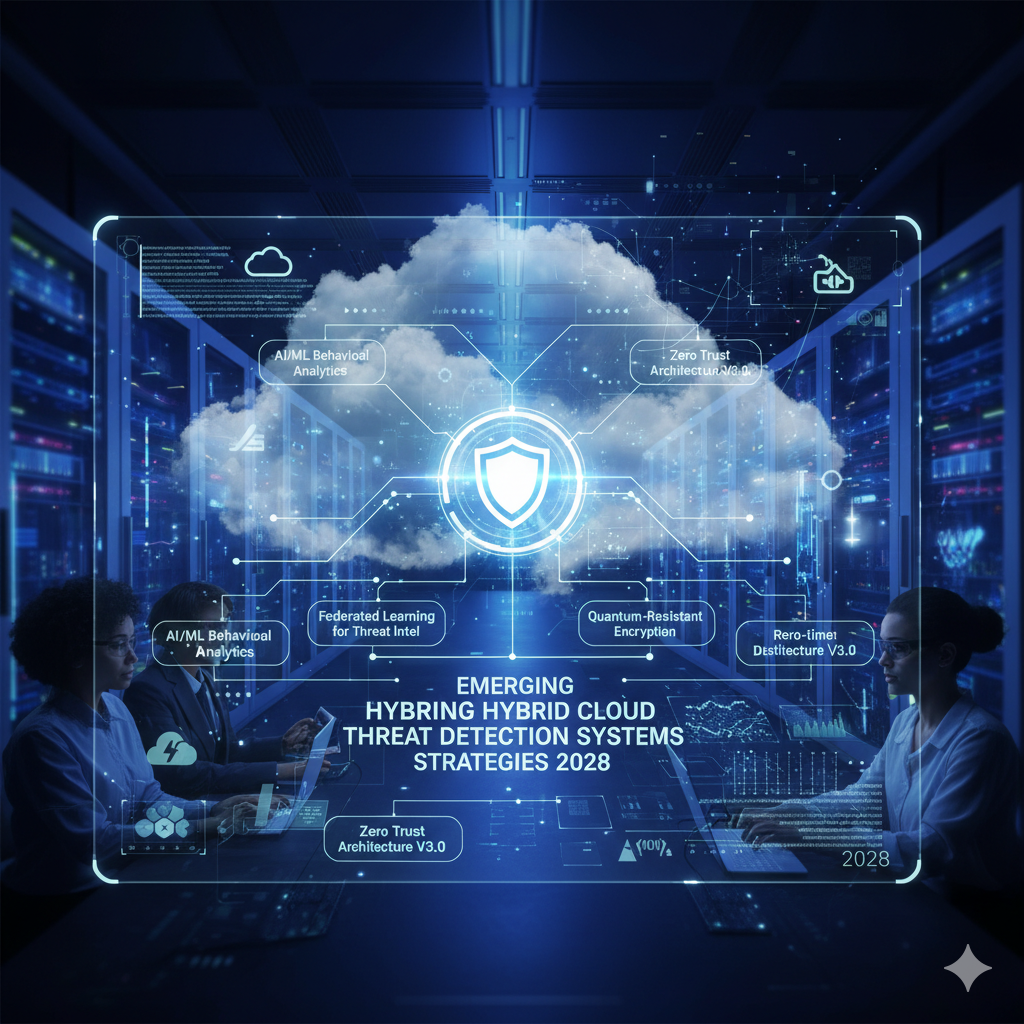
The cyber landscape of 2028 is defined by a fundamental truth: the cloud is everywhere. Enterprises across the globe now operate within hybrid multi-cloud architectures that merge public, private, and edge environments into unified operational ecosystems. These interconnected digital infrastructures have delivered unprecedented scalability and agility but they’ve also multiplied the complexity and the exposure surface of modern organizations. With data now traversing between on-premises servers, multi-vendor cloud providers, and intelligent IoT/edge networks, threat detection frameworks must evolve beyond conventional perimeters. The hybrid cloud has redefined both the identity of risk and the boundaries of security visibility. By 2028, enterprises are embracing AI-powered hybrid cloud threat detection systems intelligent frameworks equipped with real-time monitoring, automation, and predictive analytics across distributed infrastructures. These systems utilize machine learning (ML), behavioral intelligence, and zero-trust architectures to unify visibility, correlate threat telemetry, and respond instantly regardless of where the risk originates. At Informatix.Systems, we provide cutting-edge AI, Cloud, and DevOps solutions for enterprise digital transformation. Our hybrid cloud detection platforms empower organizations to secure multi-domain architectures while enabling adaptability, compliance, and predictive defense all crucial for sustainable global operations. This comprehensive analysis explores emerging hybrid cloud threat detection strategies for 2028, dissecting core technologies, architectures, AI integration models, and governance innovations that define the future of proactive cloud security.
Understanding the Hybrid Cloud Challenge
The hybrid cloud delivers seamless scalability but introduces a dynamic attack surface unprecedented in scope.
Core Security Complexities
- Decentralized Infrastructure: Data and workflows are distributed across multiple geographies and providers.
- Shadow IT Risks: Unmonitored cloud resource usage introduces blind spots.
- Identity Fragmentation: Multiple access layers across clouds complicate authentication.
- Regulatory Compliance: Balancing regional privacy policies while maintaining control.
- Cross-Cloud Threat Propagation: Malware and data exfiltration through cloud connectors.
Enterprises require integrated hybrid detection frameworks to achieve unified visibility and orchestration across every cloud node.
Evolution of Cloud Threat Detection (2020–2028)
The journey toward intelligent hybrid defense reflects a decade of innovation.
Milestones in Detection Evolution
- 2020–2022: Basic event management systems (SIEM) centralize log analysis.
- 2023–2025: Adoption of AI-driven analytics to identify anomaly-based threats.
- 2026–2027: Cloud-native automation and SOC orchestration evolve across multi-cloud platforms.
- 2028: Integration of autonomous detection ecosystems—self-scaling, AI-guided, federated across hybrid environments.
This progression represents a shift from isolated alerting to adaptive, predictive, and self-healing security ecosystems.
Anatomy of a Modern Hybrid Cloud Threat Detection System
Modern detection frameworks combine AI, telemetry analysis, and orchestration under a unified operations plane.
Key Architectural Components
- Data Ingestion Layer: Aggregates telemetry from public clouds (AWS, Azure, GCP), private servers, and edge nodes.
- Analysis and Correlation Layer: AI models detect signatures, anomalies, and correlations across sources.
- Automation and Orchestration Engine: Executes automated containment workflows and adaptive policy recalibration.
- Integration Layer: Connects multi-vendor platforms via secured APIs.
- Visualization Dashboard: Offers unified situational awareness for both security operations centers (SOCs) and compliance teams.
This architecture transforms siloed defense mechanisms into cohesive, cloud-agnostic intelligence ecosystems.
Role of AI and Machine Learning in Hybrid Threat Detection
AI and ML form the predictive core of 2028’s hybrid cloud security models.
AI-Powered Capabilities
- Anomaly Detection: Identifies behavioral deviations in real time.
- Predictive Threat Scoring: ML algorithms prioritize risks using historical attack analytics.
- Root-Cause Automation: AI pinpoints vulnerabilities triggering multi-point attacks.
- Cognitive Response Engines: AI systems adapt automatically during emerging zero-day infections.
- Contextual Intelligence: Cross-analyzes identity, location, and device attributes.
At Informatix.Systems, our AI-driven solutions integrate directly into hybrid infrastructures, delivering intelligent, autonomous defense across clouds and data centers.
Zero-Trust Frameworks for Hybrid Cloud Defense
The zero-trust model—“never trust, always verify”—is paramount in hybrid architectures.
Key Zero-Trust Mechanisms
- Dynamic Policy Enforcement: Continuously authenticates users and devices.
- Micro-Segmentation: Restricts resource access to minimize lateral breach movement.
- Adaptive Access Control: Context-aware decision-making using behavioral analytics.
- Secure Service Edges (SSE): Integrates network security with cloud access management.
Zero-trust automation in hybrid networks ensures secure access and session integrity—two critical pillars of 2028’s cyber defense strategies.
Integration of Cloud-Native Detection and DevSecOps
Integrating security directly into DevOps workflows creates continuous, adaptive protection across cloud pipelines.
DevSecOps Security Benefits
- Shift-Left Vulnerability Detection: Scans cloud configurations pre-deployment.
- CI/CD Security Reinforcement: Integrates CTI threat feeds into software release cycles.
- Continuous Compliance Monitoring: Automates auditing against frameworks like ISO 42001 and DORA+.
- Policy-as-Code (PaC): Encodes governance and compliance directly into infrastructure code.
At Informatix.Systems, we embed DevSecOps automation into hybrid detection ecosystems—maintaining agility while enforcing predictive resilience.
Behavioral Analytics and Threat Intelligence Correlation
Behavioral modeling extends beyond static indicators to interpret attacker intent.
Hybrid Threat Intelligence Functions
- Real-Time Behavioral Scoring: AI models quantify deviations in workload behavior.
- Cross-Domain Correlation: Combines CTI feeds with network telemetry.
- Outcome Prediction Modeling: ML generates potential risk escalation paths.
- Incident Forensics Automation: AI reconstructs breach timelines for post-attack learning.
Integrating behavioral intelligence transforms raw data into adaptive defense knowledge—providing hybrid networks with contextual foresight.
Cloud Security Automation and Predictive Response
As attack surfaces expand, automation becomes the essential accelerant for defending hybrid environments.
Predictive Automation Features
- AI Playbooks: Automate risk containment and recovery actions.
- Incident Simulation Algorithms: Test detection fidelity through synthetic attack generation.
- Adaptive Risk Feedback Loops: Constantly refine response accuracy using reinforcement learning.
- Self-Healing Systems: Automatically isolate and patch vulnerable assets.
At Informatix.Systems, our automation orchestration systems provide instantaneous containment of threats ensuring uninterrupted business continuity and compliance adherence.
Multi-Cloud Visibility and Telemetry Governance
Visibility remains the cornerstone of hybrid detection. Predictive governance ensures observability across integrated data domains.
Cross-Visibility Strategies
- Unified Telemetry Collectors: Aggregate logs and events from all service providers.
- AI Normalization Engines: Translate diverse data formats into standardized actionable insights.
- Privacy-Preserving Monitoring: Ensures compliance through differential anonymization.
- Continuous Risk Quantification: Evaluates cloud application and identity exposure.
Cloud telemetry creates a unified map of hybrid network behavior, giving security leaders analytical command of their ecosystem.
Emerging Technologies in Hybrid Cloud Threat Detection (2028–2030)
Hybrid defense will evolve symbiotically with emerging computing paradigms.
Key Upcoming Trends
- Quantum-Resilient Encryption: Defends hybrid data flows against quantum-based cryptanalysis.
- Federated AI Detection Models: Shared machine learning intelligence across providers.
- SASE Integration (Secure Access Service Edge): Embeds advanced networking with threat detection.
- Autonomous Security Agents: Distributed AI agents performing real-time micro-defenses.
- Synthetic Threat Simulation: AI-generated cyber scenarios for predictive training.
At Informatix.Systems, we develop quantum-resistant, AI-integrated hybrid ecosystems designed for cross-cloud interoperability and self-sustaining predictive defense.
Governance, Ethics, and Compliance in Hybrid Security
Predictive defenses must adhere to transparency, data sovereignty, and ethical AI principles.
Regulatory Frameworks for 2028
- AICDS 2028: Global AI cybersecurity ethics and audit compliance.
- GDPR++ / DORA+: Updated mandates on cross-border cloud data compliance.
- ISO 42001 AI Standards: Certifying explainable cloud-based automation.
- Data Localization Protocols: Ensuring compliance with geo-specific sovereignty laws.
At Informatix.Systems, our hybrid threat detection frameworks are designed for ethical AI operation, ensuring compliance and accountability across shared cloud infrastructures.
Industry Applications of Hybrid Cloud Detection
Different industries leverage hybrid architectures differently—demanding unique detection models.
Sectoral Deployment Scenarios
- Finance: Detects systemic cyber fraud across distributed payment clouds.
- Healthcare: Predicts IoMT-based ransomware attacks targeting hospital networks.
- Energy: Protects AI-driven grid automation and satellite-based OT infrastructure.
- Manufacturing: Safeguards smart factories’ digital twins running on hybrid compute environments.
Industry-centric hybrid AI architectures enable enterprises to balance innovation speed with robust security.
The Rise of Cognitive Security Operations (CSOC)
Cognitive Security Operations Centers represent the next stage of hybrid evolution—where AI-driven decision-making replaces manual operations.
Defining Features
- Autonomous Threat Analysis: AI consumes and interprets global telemetry in real time.
- Cognitive Collaboration: AI assists human analysts with suggested remediation.
- Predictive Analytics Integration: Detects threat probability long before active attack phases.
- Ethical Oversight: Governance ensures human accountability in AI-driven CSOCs.
At Informatix.Systems, we’re developing cognitive SOC ecosystems for predictive situational awareness where intelligence and automation combine seamlessly. Hybrid cloud infrastructure has become the backbone of global enterprise transformation and protecting it demands intelligence, adaptability, and automation. The hybrid cloud detection systems of 2028 represent the convergence of AI foresight, DevSecOps automation, and federated learning. They safeguard data, identities, and workloads no matter where they flow.At Informatix.Systems, we empower organizations through AI, Cloud, and DevOps-integrated hybrid protection systems that evolve as rapidly as the threats they guard against. The future of cloud security isn’t about reaction it’s about prediction, prevention, and continuous resilience.
FAQs
What makes hybrid cloud threat detection unique?
It spans public, private, and edge clouds simultaneously, requiring unified visibility and automated orchestration to ensure comprehensive protection.
How does AI improve hybrid cloud security?
AI enhances detection accuracy, behavioral analytics, and automated incident response across decentralized networks.
What is predictive threat detection?
Predictive systems use ML-based analytics to forecast and neutralize potential threats before they occur.
Why is Zero Trust essential in hybrid cloud environments?
Zero Trust minimizes insider and external risks by enforcing continuous authorization and least-privilege policies.
How can Informatix.Systems strengthen our hybrid defense?
We deliver customizable AI-driven detection systems integrating Cloud and DevSecOps solutions tailored for seamless, large-scale digital defense.
How does automation accelerate threat mitigation?
Adaptive playbooks and AI orchestration drive instant containment and recovery across multi-cloud assets.
What are future trends in hybrid cloud threat detection?
Quantum-resistant encryption, autonomous detection agents, and federated AI analytics will define the hybrid security of 2030.
Are Informatix.Systems' hybrid solutions compliance ready?
Yes, all hybrid detection systems align with global frameworks like AICDS 2028, GDPR++, and ISO 42001, ensuring ethical and regulatory compliance.
No posts found
Write a review