- 3/8, North Pirerbag
- 60 Feet Main Road
- Mirpur, Dhaka 1216
- +880-967-8247365
- support@informatix.systems

Emerging Hybrid Cloud Threat Detection Systems Strategies 2029
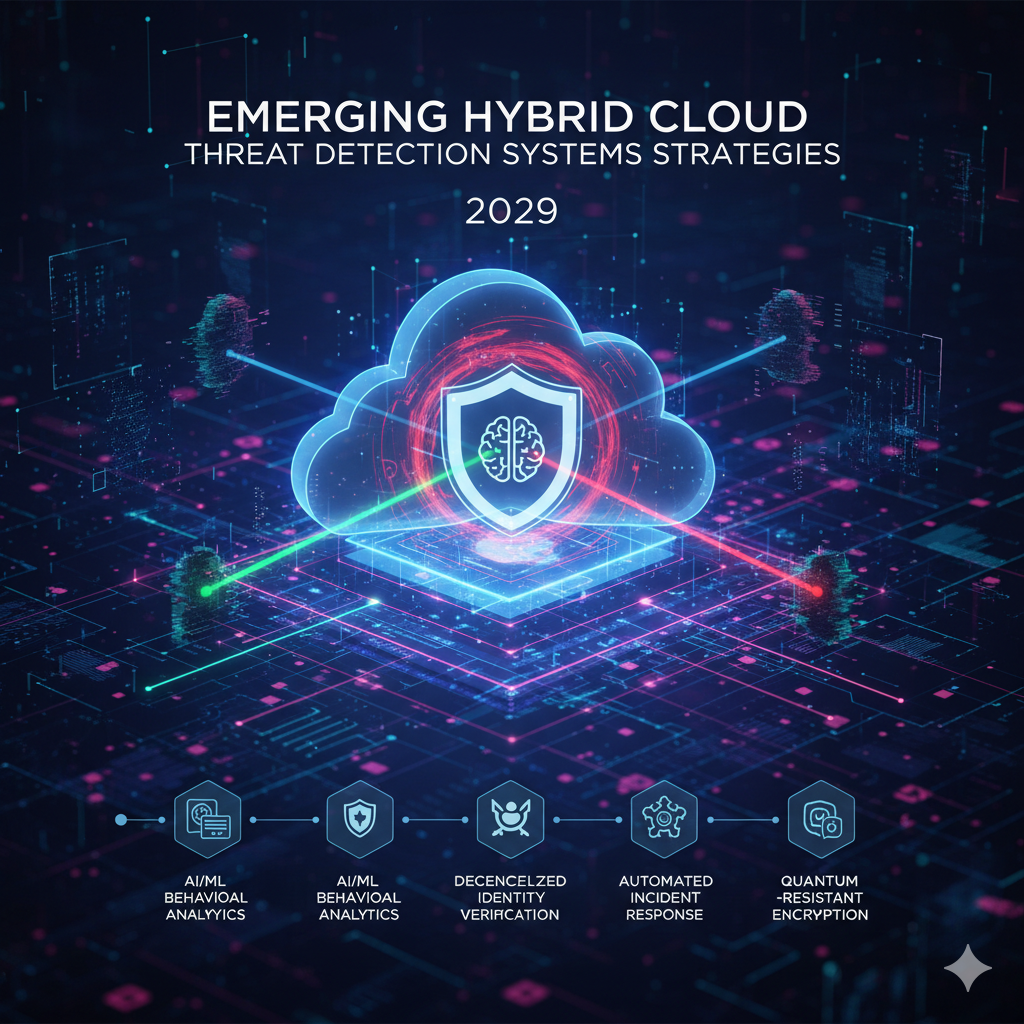
Hybrid cloud architectures have become the backbone of enterprise digital ecosystems, merging the agility of the public cloud with the control of private infrastructure. By 2029, global enterprises will be running mission-critical workloads across multi-cloud and hybrid environments to balance speed, innovation, and compliance. However, this distributed architecture has also exponentially expanded the cyber threat surface. The resulting complexity brings visibility gaps, fragmented monitoring, and inconsistent security postures across platforms. Attackers exploit these blind spots with precision targeting APIs, misconfigured containers, and data movement patterns within hybrid environments. To address this, enterprises are turning to next-generation hybrid cloud threat detection systems that leverage AI, Machine Learning (ML), DevSecOps integration, and automation to predict, identify, and remediate threats in real time. These systems operate autonomously, integrating predictive intelligence from endpoints, cloud workloads, and global threat feeds while maintaining compliance with strict data protection frameworks. By 2029, AI-powered hybrid cloud detection systems will form the first line of defense for every enterprise, transforming reactive response models into proactive, intelligence-driven safeguards. At Informatix.Systems, we provide cutting-edge AI, Cloud, and DevOps solutions for enterprise digital transformation. Our hybrid cloud threat detection frameworks harness automation and deep learning to deliver scalable, predictive, and unified protection across complex, distributed infrastructures. This article explores Emerging Hybrid Cloud Threat Detection Systems Strategies for 2029, emphasizing how AI, automation, and multi-layered intelligence enable corporations to secure hybrid ecosystems while accelerating business agility.
Understanding the Hybrid Cloud Threat Landscape
What Is a Hybrid Cloud Environment?
A hybrid cloud combines on-premises private infrastructure with public cloud resources, offering flexibility, cost-efficiency, and resilience. However, this integration creates new vulnerabilities.
Common Assets at Risk:
- APIs and cloud interfaces
- Network traffic between public and private environments
- Shared cloud tenants and virtualized assets
- DevOps deployment pipelines
- Data backups and storage containers
The Hybrid Security Challenge
- Visibility Fragmentation: Security teams struggle to view data and network traffic across multiple clouds.
- Workload Mobility Risks: Dynamic workloads introduce security blind spots.
- Compliance Complexity: Cross-border data regulations complicate cloud-based operations.
- Sophisticated Threat Actors: Attackers use AI for reconnaissance, targeting hybrid transitions and unpatched cloud services.
AI-driven hybrid detection systems solve these problems through end-to-end intelligence integration and autonomous anomaly detection.
The Evolution of Threat Detection in Hybrid Clouds
Early Security Monitoring (2010–2020)
- Manual monitoring tools are limited to static infrastructure.
- Siloed visibility and delayed threat identification.
Cloud-Native Expansion (2020–2025)
- Proliferation of cloud security solutions for specific environments (AWS, Azure, GCP).
- Data fragmentation across multiple monitoring platforms.
AI-Integrated Hybrid Security (2026–2029)
- Shift toward predictive detection and remediation using machine learning.
- Unified visibility with federated threat analysis across hybrid frameworks.
- Real-time automated containment through Security Orchestration, Automation, and Response (SOAR) systems.
Hybrid threat detection systems in 2029 leverage autonomous, contextual threat assessment tailored for distributed infrastructures.
Core Components of Hybrid Cloud Threat Detection Systems
Unified Threat Visibility Dashboard
Provides real-time insights across public, private, and containerized workloads.
AI-Enhanced Anomaly Detection Engine
Analyzes behavioral deviations using machine learning to predict emerging attacks.
Cloud Access Security Broker (CASB) Integration
Secures user access and data movement between multiple clouds.
Security Orchestration and Automation
Automates incident response, patch deployment, and alert management for faster mitigation.
Multi-Tenant Intelligence Integration
Connects data from diverse cloud vendors for unified detection and compliance management.At Informatix.Systems, we design AI-powered hybrid threat detection ecosystems that combine these components to simplify complexity while ensuring enterprise-grade security.
AI and Machine Learning Powering Cloud Threat Detection
Predictive Modeling for Threat Anticipation
Machine learning models process telemetry from millions of logs and detect probable anomalies weeks before compromise.
Deep Neural Network Training
DNNs identify unseen threats through continuously trained attack pattern recognition models.
Natural Language Processing (NLP) for Threat Analysis
AI interprets security log data and correlates contextual events across multiple systems.
Reinforcement Learning (RL)
Enables systems to dynamically improve defense mechanisms through continuous simulation and adaptation. These elements ensure self-learning detection pipelines capable of defending against both known and unknown (zero-day) threats.
Emerging Hybrid Cloud Threat Detection Strategies
Federated Cloud Intelligence Models
Enable secure collaboration between organizations to share anonymized threat data without exposing proprietary systems.
Real-Time Behavioral Analytics
AI-driven systems monitor user and workload behaviors, instantly flagging deviations indicative of lateral movement or insider threats.
DevSecOps-Integrated Security
Security is embedded directly into code pipelines (CI/CD), ensuring continuous vulnerability scanning and compliance verification.
Cloud Workload Protection Platforms (CWPP)
Unified protection systems monitor workloads across virtual machines, containers, and serverless applications.
Zero Trust Cloud Frameworks
Adaptive verification ensures no entity user, device, or application is inherently trusted. These evolving strategies represent a quantum shift from static firewalls to autonomous cloud-native threat intelligence systems.
Cloud-Native Architecture of Threat Detection Systems
Architecture Layers
- Telemetry Layer: Data ingestion from IoT endpoints, virtual networks, and cloud APIs.
- AI Analytics Layer: Advanced ML models correlate and rank risk events.
- Visualization Layer: Provides unified reporting dashboards for security teams.
- SOAR Layer: Automates containment and response actions.
Key Integrations
- SIEM systems for central log management.
- CTI feeds for adversary behavior correlation.
- CASB and DLP tools for access control and compliance.
Cloud-native architecture ensures instant scalability, orchestration, and predictive adaptability across hybrid infrastructures.
Predictive Intelligence for Hybrid Cloud Security
Threat Scoring and Contextual Intelligence
AI assigns cyber risk scores to cloud assets, prioritizing remediation steps based on attack probability.
Cross-Layer Correlation
AI unifies activity across network, endpoint, and workload layers, providing rich, contextual awareness of breach paths.
Automated Threat Forecasting
ML models use behavioral baselines to proactively forecast intrusion attempts before exploitation. At Informatix.Systems, our predictive hybrid threat systems enable enterprises to transform detection into continuous forecasting for superior resilience.
Compliance and Governance in Hybrid Security
Key Regulations:
- GDPR (EU) – Mandating data sovereignty and encryption.
- HIPAA – For cloud-based healthcare systems.
- ISO/IEC 27001 – Global security management standard.
- NIST SP 800-53 – Hybrid infrastructure benchmarks for government agencies.
AI-Driven Compliance Automation
AI continuously audits configurations and aligns controls with real-time policy updates, reducing human error and regulatory risk. This intersection of compliance and automation ensures consistent governance across multi-cloud architectures.
Benefits of Hybrid Cloud Threat Detection Systems
- Comprehensive Visibility: Full coverage across public and private resources.
- Proactive Threat Prevention: Predicts attacks long before execution.
- Reduced MTTR (Mean Time to Respond): Automated responses minimize damage.
- Cost Efficiency: Consolidated detection systems reduce manual workload and security tool sprawl.
- Compliance Acceleration: Real-time audits ensure alignment with data laws and regulations.
These systems transform cyber resilience from operational overhead to strategic advantage.
Challenges in Hybrid Cloud Threat Detection
- Data Silos Across Providers: Multiple environments hinder unified security visibility.
- Adversarial AI: Attackers deploy machine learning to evade predictive models.
- False Positives and Alert Fatigue: Excessive alerts overwhelm analysts without AI-managed prioritization.
- Integration with Legacy Tools: Resistance between modern and legacy architectures.
- Resource Optimization: Managing compute costs while performing real-time analytics.
Modern enterprises overcome these barriers through AI orchestration, context-filtered alerts, and DevOps automation frameworks.
The Future of Hybrid Cloud Threat Detection Beyond 2029
- Quantum-Resistant Security Models: Counter post-quantum cryptographic attacks.
- Autonomous Cyber Defense Systems: Self-healing AI ecosystems adapting without manual input.
- Edge-AI Threat Detection: Real-time analytics deployed at the network edge for latency-free responses.
- Decentralized Cloud Security Mesh: Multi-platform visibility through distributed AI connectors.
- Cognitive Risk Governance: Autonomous compliance and ethical monitoring for AI-driven security models.
The hybrid cloud security ecosystem in 2030 and beyond will blend prediction, automation, and intelligence into fully autonomous defense cognition systems.
Informatix.Systems: Empowering Predictive Hybrid Cloud Defense
At Informatix.Systems, we provide cutting-edge AI, Cloud, and DevOps solutions for enterprise digital transformation. Our AI-driven hybrid cloud detection systems utilize predictive analytics, cognitive automation, and federated intelligence to protect businesses from evolving threats.
Our Expertise Includes:
- AI-Enhanced Hybrid Threat Detection
- Cloud-Native Security Automation Frameworks
- DevSecOps Integration and CI/CD Scanning
- Federated ML Intelligence Collaboration
- Compliance and Governance Dashboards
Partnering with Informatix.Systems ensure enterprises stay resilient, intelligent, and cloud-secure amid the evolving digital threat landscape. By 2029, hybrid cloud security will evolve into intelligent, adaptive, and predictive defense ecosystems. Enterprises will rely on AI-powered systems that detect, learn, and respond autonomously across multi-cloud architectures. The convergence of AI, Cloud, and DevOps marks the next era of cyber resilience, where threat detection is continuous, compliance is automatic, and security becomes business empowerment. At Informatix.Systems, we lead this transformation, empowering enterprises to anticipate risks, automate responses, and protect global hybrid workloads with precision. Predict earlier. Respond smarter. Secure everywhere with Informatix.Systems.
FAQs
What is hybrid cloud threat detection?
It’s the process of identifying and mitigating cyber threats across both private and public cloud environments using AI and automation.
Why are hybrid environments more vulnerable?
They combine multiple platforms and networks, creating diverse attack surfaces that demand unified visibility.
How does AI enhance hybrid threat detection?
AI automates detection, reduces false positives, and predicts potential attacks by analyzing vast, real-time data sets.
What industries benefit most from hybrid cloud detection?
Finance, healthcare, manufacturing, energy, and government sectors leverage hybrid systems for scale and compliance.
How does DevSecOps improve hybrid security?
DevSecOps embeds continuous security within deployment workflows, enhancing vulnerability detection during software delivery.
Can hybrid threat detection reduce compliance costs?
Yes. Automated compliance audits and AI monitoring lower time and resource costs associated with manual enforcement.
What’s the future of hybrid threat detection after 2029?
Expect cloud security ecosystems driven by autonomous AI, quantum-resistant encryption, and predictive analytics for global-scale protection.
How does Informatix.Systems contribute to hybrid security?
We design predictive, AI-powered, and cloud-native defense systems that unify hybrid visibility and automate secure digital operations.
No posts found
Write a review