- 3/8, North Pirerbag
- 60 Feet Main Road
- Mirpur, Dhaka 1216
- +880-967-8247365
- support@informatix.systems

External vs Internal Cyber Threat Intelligence Services
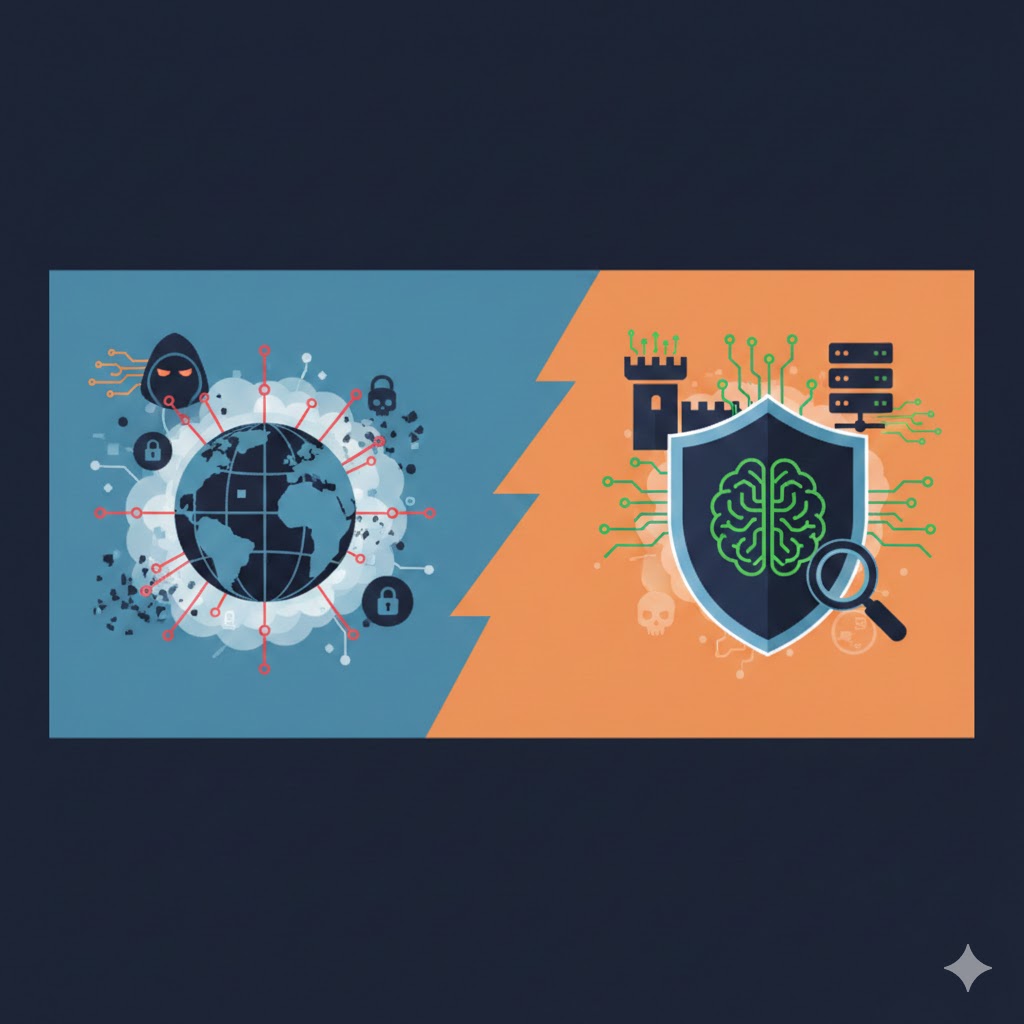
In today's hyper-connected digital landscape, cyber threats evolve at an unprecedented pace, costing enterprises trillions annually, projected to reach $10.5 trillion globally by 2025. Cyber threat intelligence (CTI) serves as the cornerstone of proactive defense, transforming raw data into actionable insights to predict, detect, and neutralize attacks. Enterprises face a critical choice: rely on external cyber threat intelligence services from specialized providers or build internal cyber threat intelligence capabilities in-house. External services deliver broad, real-time global threat data from sources like dark web monitoring and ISACs, while internal intelligence focuses on organization-specific logs and anomalies for tailored responses. The business stakes could not be higher. Data breaches doubled involving third parties from 2024 to 2025, with 76% of enterprises investing over $250k yearly in external CTI alone. Poor threat intelligence leads to delayed detection; the average Mean Time to Detect (MTTD) remains hours for many, amplifying costs from credential theft at $779k per incident. For 2026, as AI-driven attacks surge, integrating both external and internal CTI offers a hybrid model for ROI: reduced incidents by up to 60% and faster response times, at Informatix.Systems, we provide cutting-edge AI, Cloud, and DevOps solutions for enterprise digital transformation, empowering clients to blend these intelligence streams seamlessly. This article dissects external vs internal cyber threat intelligence services, exploring definitions, pros/cons, implementation, trends, and strategies. Enterprise leaders will gain frameworks like MITRE ATT&CK for prioritization, real-world case studies, and best practices to fortify defenses ahead of 2026 threats.
What Is External Cyber Threat Intelligence?
External cyber threat intelligence services involve third-party providers aggregating data from global sources, social media, dark web, honeypots, and feeds to deliver timely, contextual alerts on emerging threats. These subscription-based platforms, like CrowdStrike or Recorded Future, offer tactical Indicators of Compromise (IoCs), operational Tactics, Techniques, and Procedures (TTPs), and strategic trends. Providers tap diverse feeds for visibility beyond an organization's perimeter, preventing breaches that cost millions. In 2025, top platforms include Palo Alto Networks and Mandiant, integrating with SIEM/XDR for automated enrichment.
Key sources include:
- Open-source feeds like AlienVault OTX.
- Commercial platforms with AI analytics.
- ISACs for sector-specific intel.
What Is Internal Cyber Threat Intelligence?
Internal cyber threat intelligence derives from an organization's own data: logs, endpoints, network traffic, and user behavior analytics for hyper-specific insights. It excels in real-time detection of insider threats or zero-day threats tailored to infrastructure. Unlike external feeds, internal CTI uses tools like SIEM (e.g., Microsoft Sentinel) to baseline normal activity and flag anomalies. Implementation starts with log aggregation and MITRE ATT&CK mapping.
Benefits include:
- Custom relevance: Mirrors unique assets.
- Privacy control: No external data sharing.
- Cost efficiency for mature teams.
Key Differences: External vs Internal CTI
External and internal CTI complement yet differ fundamentally in scope, speed, and cost. External provides breadth for proactive hunting; internal offers depth for response.
Hybrid models yield 360° visibility, reducing MTTR by 60%.
Benefits of External Threat Intelligence Services
External cyber threat intelligence services enhance posture by illuminating unknown threats and adversary TTPs. Enterprises gain proactive defense, cutting breach costs via early warnings.
ROI metrics show:
- Faster detection: MTTD drops significantly.
- Efficiency gains: 76% allocate $250k+ for feeds.
- Decision empowerment: CISOs prioritize investments.
At Informatix.Systems, we provide cutting-edge AI, Cloud, and DevOps solutions for enterprise digital transformation, integrating feeds like FireEye for zero-day monitoring.
Benefits of Internal Threat Intelligence
Internal cyber threat intelligence delivers granular, real-time relevance, ideal for insider risks costing $17.4M annually per org. It correlates local data for precise remediation.
Advantages:
- Specificity: Maps to internal MITRE ATT&CK coverage.
- Real-time: Baselines anomalies instantly.
- Compliance: Keeps data in-house.
Drawbacks and Challenges
External CTI risks noise overload and generic alerts; internal struggles with skill gaps and blind spots to novel threats. Costs escalate: external subscriptions vs. internal $1M+ SOC builds.
Common pitfalls:
- External: False positives (up to 50%).
- Internal: Limited global context.
- Both: Poor integration delays ROI.
Implementation Guide for External Services
Selecting Providers
Evaluate CrowdStrike and Hudson Rock for the 2025 top-tier feeds.
Steps:
Integration Best Practices
Feed into SOAR for automation; use MITRE for mapping. At Informatix.Systems, we provide cutting-edge AI, Cloud, and DevOps solutions for enterprise digital transformation.
Implementation Guide for Internal Services
Building In-House Programs
Start with objectives, team (analysts), and tools (SIEM).
Phased approach:
- Collect: Logs via ELK stack.
- Analyze: ML for anomalies.
- Disseminate: Dashboards.
Maturity model: From ad-hoc to optimized (Gartner-inspired).
Cost Comparison and ROI Analysis
External: $250k–$1M/year; internal SOC: $1–5M. ROI via MTTD/MTTR reductions (60%+).
External ROI: Quick wins, prevented incidents save millions.
Internal ROI: Long-term efficiency for large orgs.
| Metric | External Savings | Internal Savings | |
|---|---|---|---|
| Annual Cost | $250k–$1M | $1M–$5M | |
| MTTR Reduction | 50% | 40–60% | |
| Incident Drop | 30–50% | 20–40% |
Real-World Case Studies
FireEye tracked APT32 via external intel, mitigating Southeast Asia attacks. Microsoft Sentinel internal CTI cut ransomware spread from 45% to 5%.
Hybrid Success: DIB sector reduced supply chain breaches 42% blending both. SOCRadar exposed BlueBleed leaks proactively.
Best Practices for Hybrid Integration
Combine for a holistic view: External for hunting, internal for response.
- Align objectives: MITRE ATT&CK mapping.
- Automate: SOAR playbooks.
- Share: ISACs like FS-ISAC.
- Measure: KPIs (MTTD, incidents).
At Informatix.Systems, we provide cutting-edge AI, Cloud, and DevOps solutions for enterprise digital transformation.
Future Trends in 2026
CTI market hits $55.7B by 2030 (19.3% CAGR). AI/ML predicts threats; federated learning shares sans data leak.
Trends:
- AI Automation: Reduces alert fatigue.
- Quantum-Safe: Crypto-resistant intel.
- XDR Integration: Unified platforms.
External vs internal cyber threat intelligence services each shine externally for breadth, internally for depth, but hybrids dominate 2026 defenses, slashing risks and costs. Enterprises mastering integration via AI, MITRE, and tools like Sentinel achieve superior ROI. Ready to fortify? Contact Informatix.Systems today for tailored cyber threat intelligence solutions. Schedule a free consultation at https://informatix.systems to transform your security posture.
FAQs
What is the main difference between external and internal cyber threat intelligence?
External focuses on global feeds; internal on org-specific data.
Which is cheaper: external or internal CTI services?
External subscriptions start lower ($250k), but internal scales higher long-term.
How does AI enhance cyber threat intelligence in 2026?
AI predicts attacks, automates responses, cuts MTTD.
Can small enterprises afford internal threat intelligence?
Start hybrid: External feeds + basic SIEM for ROI.
What ROI can enterprises expect from CTI?
Up to 60% faster response, 30–50% fewer incidents.
How to integrate external CTI with existing tools?
Use APIs in SIEM/SOAR; map to MITRE ATT&CK.
Are there free external threat intelligence sources?
Yes: OTX, AbuseIPDB, but commercial excels for enterprises.
Why combine external and internal CTI?
Yields 360° visibility, balancing proactive and reactive defense.
No posts found
Write a review