- 3/8, North Pirerbag
- 60 Feet Main Road
- Mirpur, Dhaka 1216
- +880-967-8247365
- support@informatix.systems

How CTI Maps Cyber Kill Chains
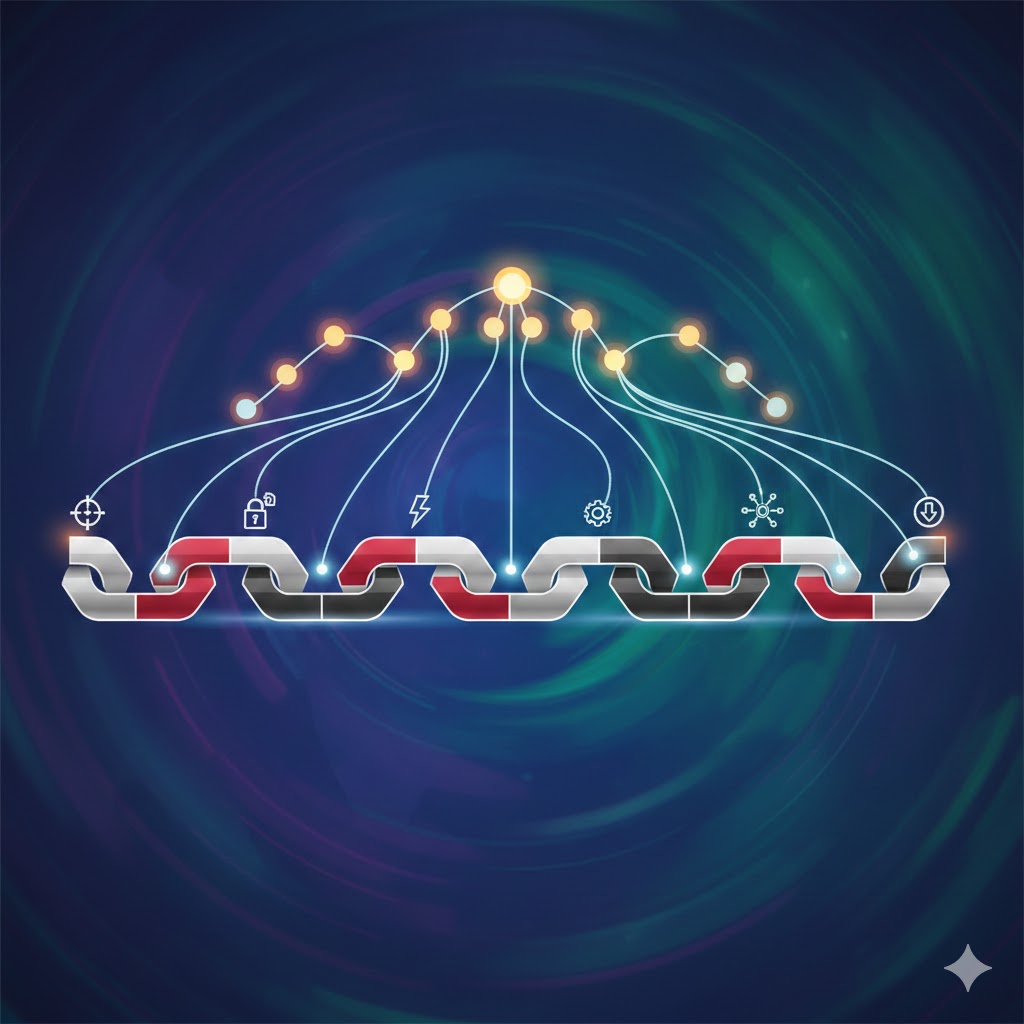
In today's hyper-connected enterprise landscape, cyber attackers follow structured methodologies to infiltrate networks and achieve devastating objectives. The cyber kill chain originally developed by Lockheed Martin breaks down sophisticated attacks into seven sequential phases: reconnaissance, weaponization, delivery, exploitation, installation, command and control, and actions on objectives. Cyber Threat Intelligence (CTI) serves as the strategic countermeasure, providing actionable insights into adversary tactics, techniques, and procedures (TTPs) to map and disrupt these chains at every stage. For enterprises, understanding how CTI maps cyber kill chains means shifting from reactive defense to proactive prevention. Traditional security tools detect threats too late, often during exploitation or later phases when damage escalates. CTI changes this by delivering evidence-based knowledge on emerging threats, actor motivations, and attack patterns, enabling organizations to break the chain early. In 2025 alone, ransomware groups and nation-state actors compressed kill chains to under 10 minutes using AI-driven tools, underscoring the urgency for intelligence-led defenses. Business leaders face mounting pressures: data breaches cost averages $4.88 million globally, with downtime crippling operations. CTI mapping identifies vulnerabilities before exploitation, prioritizes patching, and automates responses. At Informatix.Systems, we provide cutting-edge AI, Cloud, and DevOps solutions for enterprise digital transformation, integrating CTI platforms that map kill chains in real-time for unmatched resilience. This comprehensive guide explores CTI cyber kill chain integration across all phases, tools, real-world examples, and 2026 best practices. Enterprises adopting these strategies reduce mean time to detect (MTTD) by up to 68% and fortify against advanced persistent threats (APTs). Whether combating phishing campaigns or supply chain attacks, mastering CTI maps cyber kill chains delivers ROI through avoided losses and operational continuity.
Understanding Cyber Threat Intelligence
Cyber Threat Intelligence (CTI) transforms raw data into actionable defense strategies against evolving cyber risks. It encompasses strategic (high-level trends), operational (campaign details), and tactical (technical indicators) intelligence, tailored for executives, SOC teams, and endpoint protection. CTI sources include open-source feeds, commercial platforms, and internal logs, processed through a lifecycle: planning, collection, processing, analysis, dissemination, and feedback. Key benefits involve predicting attacker moves and enriching SIEM alerts with context.
- Strategic CTI: Identifies industry-targeted campaigns for C-suite risk assessment.
- Operational CTI: Tracks adversary groups like ransomware-as-a-service (RaaS) operators.
- Tactical CTI: Delivers Indicators of Compromise (IoCs) like malicious IPs for immediate blocking.
At Informatix.Systems, our AI-driven CTI solutions automate this lifecycle, ensuring enterprises stay ahead of threats.
CTI Lifecycle Breakdown
The CTI process mirrors intelligence cycles but focuses on cyber domains.
- Requirements: Define intelligence needs based on assets and threats.
- Collection: Gather data from dark web, ISACs, and endpoints.
- Processing: Normalize and enrich with MITRE ATT&CK mappings.
- Analysis: Correlate TTPs to kill chain phases.
- Dissemination: Feed insights to firewalls, EDR, and teams.
- Feedback: Refine based on incident outcomes.
Cyber Kill Chain Fundamentals
The cyber kill chain models attacks as linear processes that attackers must complete sequentially. Disrupting any phase forces restarts, increasing attacker costs and exposure.
Seven core phases provide clear intervention points:
This framework, while foundational, complements MITRE ATT&CK for post-compromise details.
Evolution of Kill Chain Models
Modern variants address limitations:
- Unified Kill Chain: Merges with ATT&CK for 18 stages across foothold, propagation, and objectives.
- Cloud Kill Chain: Adapts for serverless and multi-cloud attacks.
CTI in Reconnaissance Phase
Reconnaissance launches 80% of attacks, involving passive and active target profiling. CTI maps cyber kill chains here by flagging actor research patterns. Strategic CTI reveals targeted sectors via threat actor profiles, e.g., nation-states scanning critical infrastructure. Tactical CTI detects anomalous scans matching known TTPs.
Disruption tactics:
- Deploy deception networks mimicking assets.
- Monitor OSINT tools for leaked credentials.
- Use threat feeds for early adversary tracking.
Informatix.Systems integrates CTI with Cloud monitoring to alert on reconnaissance spikes.
Key CTI Indicators
CTI During Weaponization
Attackers craft payloads offline, evading early detection. CTI counters by tracking exploit kit evolution and malware signatures in underground forums. Operational CTI profiles RaaS platforms, predicting weapon types. Platforms like Recorded Future analyze dark web markets for fresh payloads.
Prevention measures:
- Signature feeds for new malware families.
- Behavioral analysis of exploit chains.
- Vendor intelligence on zero-day markets.
Enterprises using CTI here block 40% more weaponized threats pre-delivery.
CTI for Delivery Phase Blocking
Delivery succeeds via phishing (90% of breaches) or watering holes. CTI maps these by correlating IoCs with delivery vectors. Tactical feeds block malicious URLs and attachments in real-time. AI-enriched email gateways score phishing based on actor campaigns.
Effective strategies:
- URL reputation scoring.
- Attachment sandboxing.
- Employee training with CTI-derived lures.
Informatix.Systems DevOps pipelines automate delivery filters across hybrid environments.
Phishing CTI Metrics
| Metric | CTI Impact |
|---|---|
| False Positives | Reduced 55% |
| Block Rate | 92% success |
Mapping CTI to Exploitation
Exploitation triggers via unpatched flaws, CTI prioritizes CVEs by active exploitation. Frameworks map TTPs to vulnerabilities. CTI tools like CrowdStrike Falcon score risks using ATT&CK. Patch management follows intelligence on exploited flaws.
Key integrations:
Installation Phase Intelligence
Post-exploitation, attackers install backdoors. CTI detects persistence via registry changes and file drops matching TTPs. Endpoint CTI enriches logs with actor histories. Automated playbooks isolate hosts.
Disruption list:
Command & Control Detection
C2 establishes remote access via beacons. CTI maps domains and IPs from global feeds. Network CTI baseline traffic, flagging anomalies. DNS sinkholing disrupts channels.
Advanced tactics:
- Behavioral analytics for exfiltration.
- Proxy detection.
- Multi-stage C2 blocking.
Informatix.Systems AI platforms predict C2 pivots.
Actions on Objectives: Prevention
The final phase executes ransomware or exfiltration. CTI forecasts objectives from actor motives. Strategic intelligence triggers data loss prevention. Backup validation thwarts encryption.
Holistic defenses:
CTI Tools and Platforms
Top CTI platforms for kill chain mapping integrate feeds, analytics, and automation.
Select based on enterprise scale Informatix.Systems customizes these for DevOps.
Integration Best Practices
Real-World CTI Kill Chain Disruptions
Financial Phishing Block: CTI profiled campaigns, training reduced clicks 70%.
Healthcare Ransomware: Early IoCs prevented encryption across networks.
Target Breach Lessons: Post-incident CTI mapped supply chain recon.
Energy Sector: Actor tracking hardened ICS protections.
CTI Metrics and ROI
Measure CTI cyber kill chain success via KPIs.
- MTTD/MTTR Reduction: Track pre/post-CTI.
- Disrupted Attacks: Phase-specific blocks.
- ROI Formula: (Avoided Loss - CTI Cost) / Cost.
Quality scoring: Enrichment (20%), Integration (25%).
Future of CTI Kill Chain Mapping
By 2026, AI automates 80% of mappings, with quantum-resistant CTI emerging. Unified models blend Kill Chain and ATT&CK.
Trends:
- GenAI threat prediction.
- Zero-trust intelligence.
- Collaborative ISACs.
Informatix.Systems lead with AI-Cloud CTI for 2026 threats. Mastering how CTI maps cyber kill chains empowers enterprises to disrupt attacks proactively across all phases, from reconnaissance to exfiltration. Integrated intelligence reduces risks, optimizes resources, and delivers measurable ROI through faster detection and response. At Informatix.Systems, we provide cutting-edge AI, Cloud, and DevOps solutions for enterprise digital transformation. Partner with us to fortify your defenses. Ready to map your cyber kill chains? Contact Informatix.Systems today for a free CTI assessment and deploy intelligence-led security.
FAQs
What is the cyber kill chain?
A seven-phase model outlining attack progression: reconnaissance to actions on objectives.
How does CTI disrupt early kill chain phases?
By providing IoCs and TTPs for reconnaissance and delivery blocking.
Best CTI tools for kill chain mapping?
CrowdStrike and Recorded Future integrate with SIEM for automation.
CTI vs MITRE ATT&CK?
CTI feeds data; ATT&CK maps techniques within kill chain phases.
Measure CTI effectiveness?
Track MTTD/MTTR reductions and disrupted attacks per phase.
Real-world CTI success examples?
Financial phishing blocks, healthcare ransomware stops.
Future CTI trends for 2026?
AI prediction, unified frameworks.
Implement CTI at enterprise scale?
Start with lifecycle integration, scale via platforms like Informatix.Systems.
No posts found
Write a review