- 3/8, North Pirerbag
- 60 Feet Main Road
- Mirpur, Dhaka 1216
- +880-967-8247365
- support@informatix.systems

How CTI Services Reduce Cyber Risk Exposure
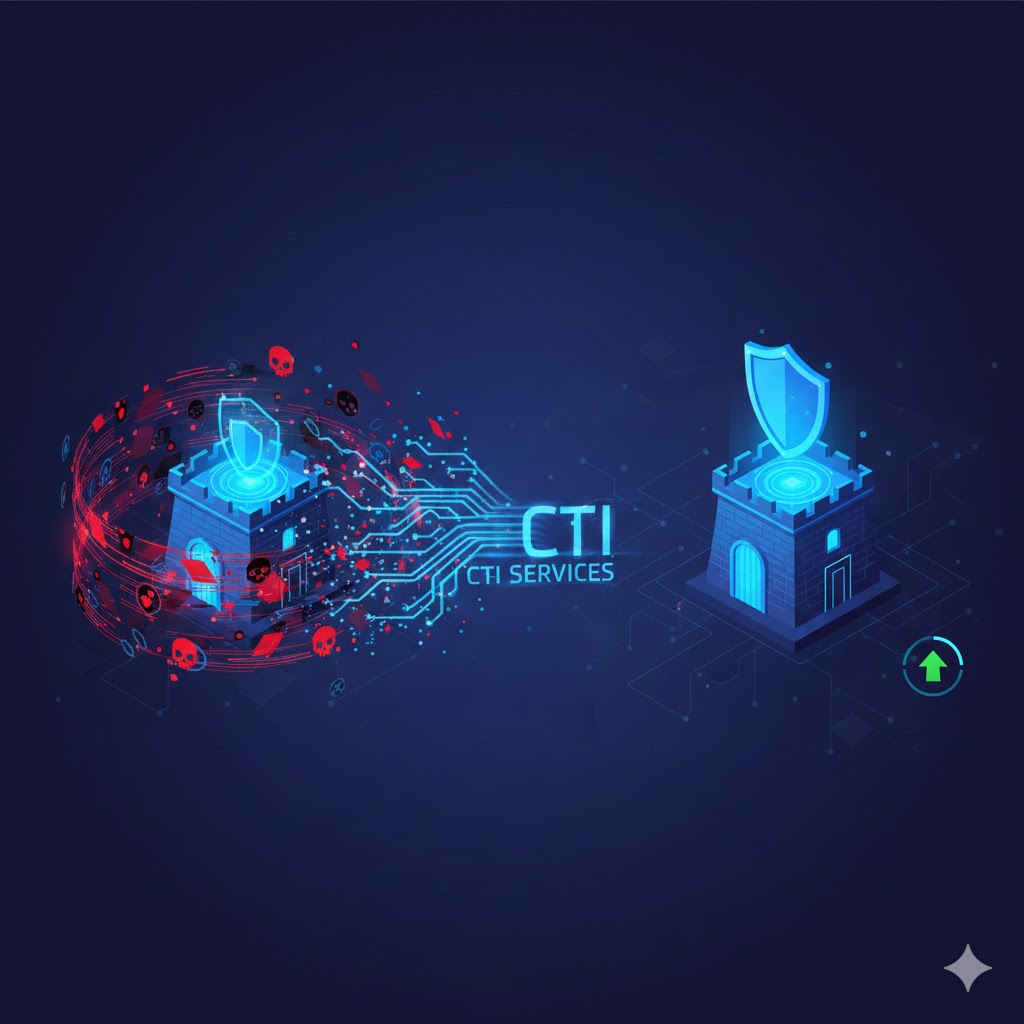
In today's hyper-connected digital landscape, cyber threats evolve at unprecedented speeds, targeting enterprises with sophisticated attacks that can cripple operations and erode trust. Cyber Threat Intelligence (CTI) services emerge as a critical shield, transforming raw threat data into actionable insights that reduce cyber risk exposure by enabling proactive defense. Businesses face an average of $4.45 million in breach costs annually, but organizations leveraging CTI cut incident response times by up to 58% and reduce breach impacts by 50%. At Informatix.Systems, we provide cutting-edge AI, Cloud, and DevOps solutions for enterprise digital transformation, integrating CTI to fortify your security posture against emerging risks. This article explores how CTI services deliver measurable cyber risk reduction, from threat anticipation to optimized resource allocation. As 2026 approaches, with AI-driven attacks and supply chain vulnerabilities on the rise, CTI stands as the cornerstone of resilient cybersecurity. Enterprises adopting CTI report 72% improvement in threat detection and response capabilities.
What is CTI?
Cyber Threat Intelligence (CTI) involves collecting, analyzing, and disseminating evidence-based knowledge about cyber threats, including adversaries, tactics, techniques, and procedures (TTPs). It categorizes into strategic (high-level trends), operational (campaign details), tactical (tools and IOCs), and technical (malware signatures) intelligence. CTI services aggregate data from open-source intelligence (OSINT), commercial feeds, and internal logs to provide context-rich insights.
- Strategic CTI: Informs executive decisions on geopolitical risks.
- Operational CTI: Tracks active campaigns targeting your sector.
- Tactical CTI: Supplies IOCs for immediate blocking.
Unlike basic alerts, CTI services prioritize threats relevant to your environment, directly reducing cyber risk exposure.
Core Components of CTI
Data Collection
Sources include dark web forums, SIEM logs, and vendor feeds.
Analysis Frameworks
Uses MITRE ATT&CK for TTP mapping.
Why CTI Matters for Enterprises
Cyber attacks surged 30% in 2025, with ransomware hitting healthcare at 67% probability. CTI services shift from reactive to proactive security, minimizing dwell time and financial losses. Enterprises using CTI achieve cyber risk reduction through prioritized vulnerability patching and enriched detections.
Key business imperatives:
- Compliance with NIST and GDPR.
- Protection of crown-jewel assets.
- Cost avoidance exceeding CTI investments by 5x ROI.
At Informatix.Systems, we provide cutting-edge AI, Cloud, and DevOps solutions for enterprise digital transformation, embedding CTI into holistic risk management.
Types of CTI Services
CTI services span four primary types, each tailored to reduce cyber risk exposure at different levels.
Blending these types yields comprehensive coverage.
Strategic CTI Deep Dive
Guides resource allocation amid supply chain threats.
Operational CTI in Action
Delivers real-time alerts on sector-specific attacks.
Mechanisms of Cyber Risk Reduction
CTI services reduce cyber risk exposure by lowering Loss Event Frequency (LEF) and Loss Magnitude (LM), yielding positive ROI via avoided losses.
Proactive Threat Detection
Identifies reconnaissance before exploitation, cutting MTTD by 50%.
- Monitors precursor activities like phishing recon.
- Enriches alerts with attacker context.
Prioritized Vulnerability Management
Correlates CVEs with active exploits, focusing patches on high-risk flaws.
CTI Integration with SIEM and SOAR
Integrating CTI services with SIEM automates threat enrichment, while SOAR orchestrates responses. This combo slashes MTTR by automating playbooks.
Implementation steps:
- Feed CTI IOCs into SIEM rules.
- Trigger SOAR workflows for containment.
- Measure via dashboards.
CISA endorses this for ICS environments.
SIEM Enrichment Benefits
Boosts detection accuracy by 40%.
SOAR Automation Gains
At Informatix.Systems, we provide cutting-edge AI, Cloud, and DevOps solutions for enterprise digital transformation, specializing in seamless CTI-SIEM integrations.
CTI vs Traditional Threat Hunting
CTI services provide external context to amplify threat hunting, fusing feeds with internal telemetry for proactive hunts.
CTI informs hunting hypotheses via TTPs.
Real-World Case Studies
CTI services delivered $290K annual savings for a logistics firm via 50% faster investigations.
- Air Freight Company: Automated 70% workflows, 40% detection boost.
- Healthcare Provider: 58% MTTR reduction post-CTI.
- Financial Sector: Prevented $11M ransomware via prioritized intel.
These cases highlight cyber risk reduction metrics like 72% detection improvement.
Enterprise ROI Examples
Recorded Future users saved 100+ hours weekly.
Key Metrics for CTI Success
Track CTI services' impact with quantitative indicators.
Core KPIs:
- MTTD/MTTR Reduction: Aim for 50% drop.
- False Positive Rate: Below 20%.
- Threat Detection Rate: 90%+ accuracy.
- ROI Calculation: (Avoided ALE - CTI Cost) / Cost.
| Metric | Target | Measurement Tool |
|---|---|---|
| MTTD | <24 hours | SIEM logs |
| ROI | >300% | Incident reports |
| Utilization | 80% intel actioned | Dashboards |
Implementation Best Practices
Deploy CTI services strategically for maximum cyber risk reduction.
Phased approach:
- Define Objectives: Align with assets and risks.
- Select Feeds: OSINT + premium sources.
- Integrate Platforms: TIP, SIEM, SOAR.
- Train Teams: On intel consumption.
- Measure and Iterate: Quarterly reviews.
Start small, scale with maturity.
2026 Roadmap
Embed AI for predictive analytics. At Informatix.Systems, we provide cutting-edge AI, Cloud, and DevOps solutions for enterprise digital transformation, guiding CTI implementations.
Future Trends in CTI for 2026
2026 heralds AI-augmented CTI services, with 25% enterprises fusing intel into IAM/GRC.
- Agentic AI: Autonomous threat prediction.
- Vendor Consolidation: Single-pane platforms.
- Supply Chain Focus: 30% incidents preempted.
- Internal Fusion: 36% blend of external/internal data.
Proactive AI-CTI redefines defense.
AI-Driven Evolution
Predicts attacks via TTP operationalization.
Challenges and Mitigation Strategies
Common hurdles in CTI services include data overload and skill gaps.
Solutions:
- Overload: Use TIP for filtering.
- Integration: API-based feeds.
- Skills: Partner with experts like Informatix.Systems.
Mitigate via clear KPIs and automation.
Cost-Benefit Analysis
CTI services yield 5-10x ROI through prevented breaches.
- Costs: Feeds ($50K/year), staff ($200K).
- Savings: $1M+ per averted incident.
- Breakeven: Within 6 months for mid-size firms.
Healthcare ROI exceeds 300% amid high breach costs. CTI services fundamentally reduce cyber risk exposure by enabling proactive detection, streamlined responses, and optimized investments, with proven metrics like 50% incident impact cuts and substantial ROI. Enterprises embracing CTI in 2026 will outpace threats in an AI-amplified landscape. Ready to fortify your defenses? Contact Informatix.Systems today for tailored CTI services integrated with our cutting-edge AI, Cloud, and DevOps solutions for enterprise digital transformation. Schedule a free risk assessment now.
FAQs
What are CTI services?
CTI services collect and analyze threat data to provide actionable intelligence, categorized into strategic, operational, tactical, and technical types.
How much do CTI services reduce cyber risk?
Organizations report up to 50% breach impact reduction and 58% faster response times via CTI services.
What is the ROI of CTI?
Typical ROI exceeds 300%, calculated as avoided losses over costs, with $290K annual savings common.
How to integrate CTI with existing tools?
Feed IOCs into SIEM/SOAR for automated enrichment and playbooks.
What are the 2026 CTI trends?
AI augmentation, vendor consolidation, and supply chain focus will dominate.
Can small enterprises use CTI?
Yes, start with affordable OSINT feeds and cloud TIPs for scalable cyber risk reduction.
How does CTI differ from SIEM?
SIEM detects logs; CTI services add external context for prioritization.
Is CTI essential for compliance?
Absolutely, supports NIST/GDPR via threat-informed controls.
No posts found
Write a review