- 3/8, North Pirerbag
- 60 Feet Main Road
- Mirpur, Dhaka 1216
- +880-967-8247365
- support@informatix.systems

How Threat Intelligence Improves SOC Performance
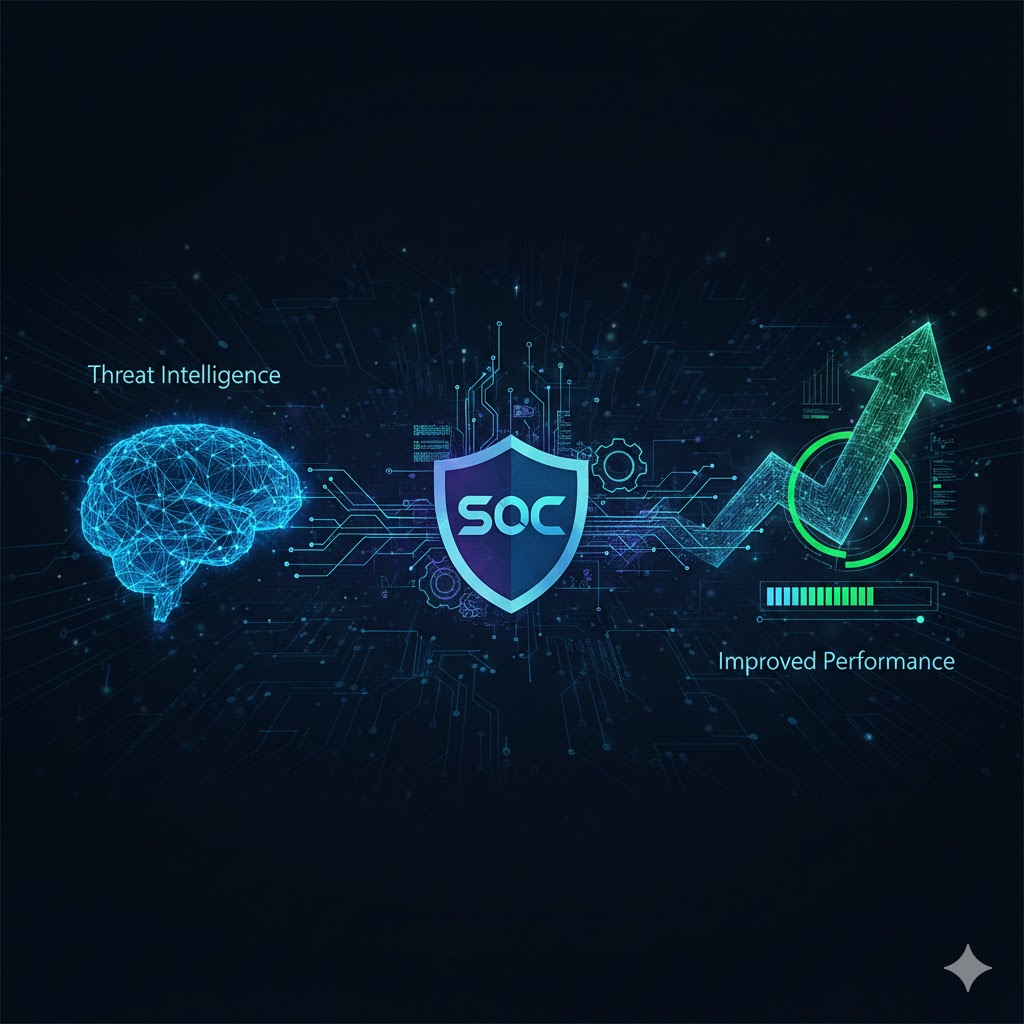
In today's hyper-connected digital landscape, organizations face an escalating barrage of sophisticated cyber threats, from ransomware campaigns and advanced persistent threats (APTs) to zero-day exploits and supply chain attacks. Security Operations Centers (SOCs) serve as the frontline defenders, but traditional reactive approaches often leave them overwhelmed by alert fatigue, false positives, and delayed responses. Enter threat intelligence: a game-changing discipline that transforms raw data into actionable insights, empowering SOC teams to anticipate, detect, and neutralize threats before they inflict damage. The business stakes couldn't be higher. According to industry reports, the average cost of a data breach now exceeds $4.5 million, with dwell times averaging 204 days for undetected intrusions. Without threat intelligence, SOCs operate in the dark, chasing symptoms rather than root causes, leading to inefficient resource allocation and heightened risk exposure. By contrast, SOCs leveraging high-quality threat intelligence report up to 60-70% reductions in mean time to detect (MTTD) and respond (MTTR), slashing breach costs by millions. At Informatix.Systems, we provide cutting-edge AI, Cloud, and DevOps solutions for enterprise digital transformation, helping SOCs integrate threat intelligence seamlessly for superior performance. This comprehensive guide explores how threat intelligence improves SOC performance, from enhanced detection to ROI-driven outcomes, with a forward-looking lens on 2026 trends like AI-driven automation and predictive analytics. Whether you're a CISO optimizing a mature SOC or building from the ground up, these insights deliver proven strategies for resilience.
What Is Threat Intelligence?
Threat intelligence refers to the collection, analysis, and dissemination of data about current and emerging cyber threats, including indicators of compromise (IOCs), tactics, techniques, and procedures (TTPs), and actor profiles. It draws from diverse sources like open-source feeds, dark web monitoring, commercial platforms, and internal telemetry to provide contextualized, actionable knowledge. Unlike raw logs or alerts, threat intelligence adds context, explaining why an IOC matters, who is behind it, and how it might evolve. Types include strategic (high-level trends), tactical (TTPs), operational (campaign details), and technical (IOCs like hashes or IPs). For SOCs, this intelligence shifts operations from reactive firefighting to proactive defense, enabling prioritization of high-impact threats. Platforms like Cyble Vision and Stellar Cyber exemplify 2025-2026 leaders, offering AI-enriched feeds that integrate with SIEM and SOAR tools.
Core Components of Threat Intelligence
Effective threat intelligence rests on four pillars: data collection, processing, analysis, and dissemination.
- Data Collection: Aggregates from threat feeds, social media, dark web, and endpoints.
- Processing: Normalizes and enriches data using STIX/TAXII standards.
- Analysis: Applies AI/ML for pattern recognition and threat scoring.
- Dissemination: Delivers via dashboards, APIs, and automated alerts.
At Informatix.Systems, we provide cutting-edge AI, Cloud, and DevOps solutions for enterprise digital transformation, ensuring these components scale across hybrid environments.
Strategic vs. Tactical Intelligence
How Threat Intelligence Enhances Threat Detection
Threat intelligence supercharges detection by providing IOCs and TTPs that contextualize alerts, reducing false positives by up to 90% in mature SOCs. Integrated with SIEM, it enables proactive hunting for emerging threats like new ransomware strains before they hit. Automated ML algorithms scan traffic against intelligence feeds, flagging anomalies in real-time. This cuts MTTD from days to minutes, as seen in platforms automating signature matching.
Key Detection Improvements
- IOC Matching: Block known malicious IPs/domains instantly.
- Behavioral Analytics: Spot TTPs like lateral movement.
- Zero-Day Prediction: AI forecasts exploits via vulnerability intel.
Streamlining Incident Response with Intelligence
Incident response (IR) accelerates dramatically with threat intelligence, enabling playbooks tailored to specific actors and campaigns. Analysts gain context on attack scope, reducing investigation time by 50-70%. SOAR platforms orchestrate automated containment,e.g., isolating endpoints on IOC matches, while intelligence informs escalation decisions. At Informatix.Systems, we provide cutting-edge AI, Cloud, and DevOps solutions for enterprise digital transformation, powering IR automation for minimal dwell times.
IR Workflow Optimization
- Enrichment: Feed alerts into TIPs for actor attribution.
- Prioritization: Score incidents by business impact.
- Containment: Auto-block via integrated feeds.
Reducing Alert Fatigue and False Positives
SOC analysts drown in 10,000+ daily alerts, with 95% false positives in immature setups. Threat intelligence filters noise by scoring alerts against global context, boosting accuracy. AI refines models over time, learning from resolved incidents to minimize errors. Result: Analysts focus on true positives, improving morale and efficiency.
Boosting Threat Hunting Capabilities
Threat hunting, proactively searching for hidden threats, thrives on intelligence feeds revealing unseen TTPs. Hunters use intel to hypothesize adversary paths, validating via endpoint queries. Integration with EDR tools uncovers dwell times reduced by 60%. In 2026, AI agents will automate hypothesis generation.
Hunting Best Practices
- Leverage MITRE ATT&CK mappings.
- Correlate intel with logs for stealthy APTs.
- Simulate attacks with intel-derived scenarios.
Key SOC Metrics Improved by Threat Intelligence
Threat intelligence directly impacts core KPIs, providing quantifiable ROI.
Tracking these via dashboards proves value to executives.
SOC Maturity Model and Threat Intelligence
Gartner's SOC maturity model ties threat intelligence to progression: from reactive (Level 2) to predictive (Level 4).
- Level 1 (Minimal): Basic alerts, no intel.
- Level 3 (Proactive): Integrated feeds, automation.
- Level 5 (Optimized): AI-driven, autonomous hunting.
Advancing requires TIP integration and training. At Informatix.Systems, we provide cutting-edge AI, Cloud, and DevOps solutions for enterprise digital transformation, accelerating maturity.
Challenges in SOC-Threat Intelligence Integration
Common hurdles include data silos, skill gaps, and feed overload.
- Overcoming Silos: Use APIs for SIEM/TIP sync.
- Skill Gaps: Train on CTI analysis (costly but essential).
- Feed Management: Prioritize high-fidelity sources.
Real-World SOC Wins
- Chemical Firm: Threat intel + awareness spiked detections 100x, optimized with fewer analysts.
- Enterprise Breach Prevention: Early intel cut response costs 60-70%, saving $1-4M per incident.
- Ransomware Defense: Proactive IOC hunting contained attacks pre-escalation.
These validate threat intelligence ROI.
Top Threat Intelligence Platforms for 2026
2026 leaders emphasize AI and automation.
- Cyble Vision: Real-time AI feeds, vulnerability ranking.
- Stellar Cyber: Interflow normalization, auto-response.
- CrowdStrike Falcon X: TTP-focused, endpoint integration.
| Platform | Strengths | SOC Fit |
|---|---|---|
| Cyble Vision | AI prediction | Mature SOCs |
| Stellar Cyber | Automation | Lean teams |
Future Trends: AI and Threat Intelligence in SOCs (2026)
By 2026, AI-native stacks dominate: agentic AI for triage, predictive modeling, self-optimizing defenses. Expect 80% automation in MTTR, autonomous hunting. At Informatix.Systems, we provide cutting-edge AI, Cloud, and DevOps solutions for enterprise digital transformation, positioning clients ahead.
Calculating ROI from Threat Intelligence
Threat intelligence ROI stems from cost avoidance: $1.76M saved per faster containment. Formula: (Breach Costs Avoided - TI Investment) / Investment.
Best Practices for Implementation
- Start Small: Pilot one feed with SIEM.
- Automate: Build SOAR playbooks.
- Measure: Track KPIs quarterly.
- Collaborate: Share intel internally/externally.
Threat intelligence fundamentally elevates SOC performance by enabling proactive detection, streamlined response, and metric-driven optimization, reducing risks in an era of AI-powered attacks. From slashing MTTD/MTTR to fueling threat hunting, its impact is transformative, especially as 2026 brings autonomous SOCs. Ready to supercharge your SOC? Contact Informatix.Systems today for a free threat intelligence assessment. At Informatix.Systems, we provide cutting-edge AI, Cloud, and DevOps solutions for enterprise digital transformation. Visit https://informatix.systems or call now to fortify your defenses.
FAQs
What is the primary benefit of threat intelligence for SOCs?
It reduces false positives and accelerates detection by providing context on IOCs and TTPs.
How does threat intelligence reduce MTTR?
By enriching alerts for faster triage and automating containment via SOAR integration.
Which SOC metrics improve most with threat intelligence?
MTTD, MTTR, false positive rates, and incident closure rates see 50-90% gains.
Can small SOCs afford threat intelligence platforms?
Yes, open-source options like Anomali ThreatStream scale affordably, with ROI from cost savings.
What role does AI play in 2026 threat intelligence?
AI enables predictive modeling, autonomous hunting, and noise reduction.
How to measure threat intelligence ROI?
Track avoided breach costs against investment, targeting 60-70% response time cuts.
What are common integration challenges?
Data silos and skill gaps; overcome with APIs and targeted training.
Is threat intelligence essential for SOC maturity?
Absolutely, it's core to advancing from reactive to predictive levels.
No posts found
Write a review