- 3/8, North Pirerbag
- 60 Feet Main Road
- Mirpur, Dhaka 1216
- +880-967-8247365
- support@informatix.systems

Hybrid Cloud Threat Detection Systems 2025
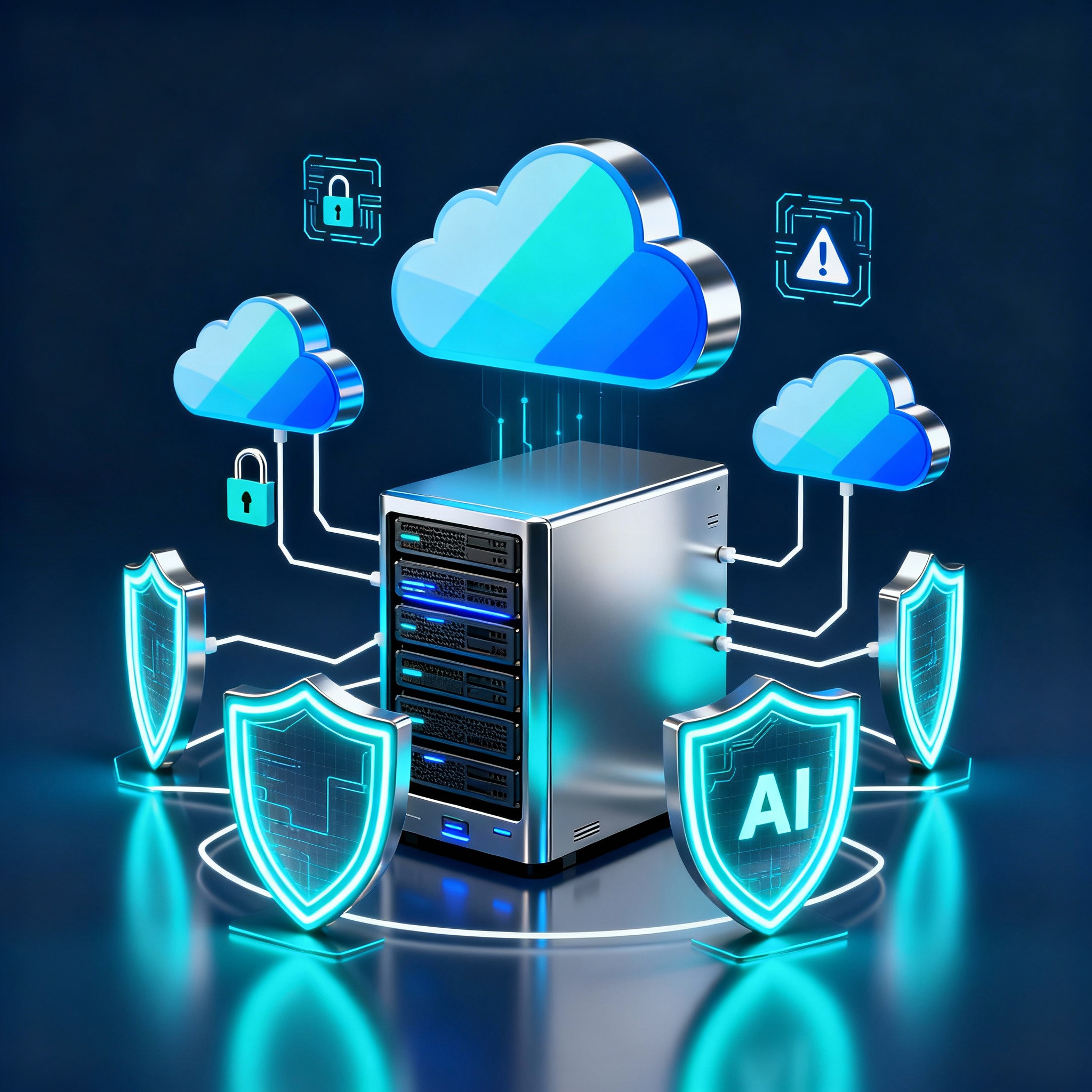
Hybrid cloud architectures have become the backbone of modern digital enterprises. As businesses scale, combining public and private cloud environments delivers unmatched flexibility, optimized cost structures, and operational agility. However, this hybrid approach also introduces an expanded attack surface where distributed networks, complex integrations, and shared responsibilities create blind spots in traditional security models. By 2025, cybersecurity will have shifted toward AI-powered hybrid cloud threat detection systems, bridging visibility gaps across multi-cloud ecosystems. These systems use machine learning (ML) and automation to discover anomalies, identify insider threats, and predict security breaches before they affect mission-critical operations. With sensitive workloads spread between environments like AWS, Azure, GCP, and on-premises data centers, unified threat detection has become a business-critical priority. Hybrid cloud security must now deal with east-west traffic, containerized workloads, and DevOps automation architectures, all prone to misconfiguration and exploitation. As traditional firewalls and SIEM systems fail to adapt, modern detection platforms use real-time telemetry, behavioral analytics, and continuous intelligence correlation to establish resilient, self-learning security ecosystems. At Informatix.Systems, we provide cutting-edge AI, Cloud, and DevOps solutions for enterprise digital transformation. Our AI-driven hybrid cloud security frameworks deliver predictive threat detection, compliance automation, and multi-cloud visibility, empowering organizations to secure innovation without compromising agility. This comprehensive article dives deep into Hybrid Cloud Threat Detection Systems in 2025, their architectures, use cases, and future potential, designed to help enterprises anticipate and neutralize sophisticated attacks in distributed infrastructure environments.
Understanding Hybrid Cloud Threat Detection
Hybrid cloud infrastructure blends on-premises, private, and public cloud resources into a unified environment.
Key Threat Detection Objectives:
- Visibility: Identifying anomalies across hybrid networks.
- Automation: Enabling incident response with AI-led orchestration.
- Resilience: Protecting cross-platform workloads from evolving threats.
- Compliance: Enforcing consistent policies across multi-cloud systems.
Hybrid Cloud Threat Detection Systems unify monitoring and threat response across disjointed infrastructures, ensuring continuous protection and high availability.
The Evolving Threat Landscape in Hybrid Environments
Hybrid ecosystems face dynamic new risks as enterprise networks grow in size and complexity.
Prominent Threats in 2025:
- Cloud Misconfigurations: The leading cause of hybrid vulnerabilities.
- Compromised API Access: Attackers exploit insecure integrations.
- Insider Threats: Privileged user abuse within corporate systems.
- Ransomware in Multi-Cloud Fabrics: Lateral propagation across environments.
- Shadow IT and Unauthorized Deployments: Unmonitored endpoints introduce blind spots.
AI-augmented detection tools monitor continuous traffic flow, alerting organizations to threats across both north-south and east-west cloud communication routes.
Architecture of Hybrid Cloud Threat Detection Systems
Modern systems integrate visibility, analytics, and automation across hybrid operations.
Core Layers:
- Data Collection Layer: Ingests telemetry from cloud APIs, DevOps pipelines, and network sensors.
- Analytics Engine: Employs ML and behavioral modeling for anomaly detection.
- Threat Intelligence Layer: Correlates attack indicators using global CTI feeds.
- Response Automation Layer: Orchestrates real-time containment across platforms.
- Visibility Dashboards: Centralize insights, KPIs, and compliance metrics.
At Informatix.Systems, our hybrid security architecture aligns with Zero Trust and AI-driven governance, ensuring end-to-end data protection through adaptive automation.
The Role of Artificial Intelligence in Threat Detection
AI revolutionizes hybrid cloud threat monitoring by managing exponential data streams with contextual awareness.
AI-Powered Capabilities:
- Behavioral Anomaly Recognition: Detects deviations in system or user behavior.
- Pattern Correlation: Links seemingly unrelated security events across cloud layers.
- Predictive Analytics: Forecasts high-risk exposures before exploitation.
- Intelligent Automation: Executes autonomous containment with minimal human input.
Informatix.Systems employs deep neural networks and reinforcement learning models to make hybrid cloud monitoring self-evolving and proactive against shifting threat vectors.
Integration with SOC and SIEM Platforms
Modern detection frameworks integrate contextual intelligence into Security Operations Centers (SOCs) and Security Information & Event Management (SIEM) systems.
Integration Benefits:
- Unified Threat Visibility: Cross-environment telemetry consolidation.
- Automated Detection and Reporting: AI reduces investigation time.
- Contextual Risk Insights: SOC analysts focus on incidents ranked by ML-based severity.
- Faster Mean Time to Detect (MTTD): Real-time cross-platform event correlation.
With AI-integrated SOC pipelines, Informatix.Systems enable collaborative hybrid security orchestration, reducing dwell time and strengthening compliance adherence.
Preventing Multi-Vector Hybrid Cloud Attacks
Threat detection must evolve beyond reactive monitoring to predict diverse attack vectors.
Major Attack Vectors Mitigated by Hybrid Systems:
- Lateral Movement Monitoring: Detects intruder traversal between internal environments.
- Malicious Insider Controls: Uses ML profiling to verify access anomalies.
- Application-Layer Attacks: Blocks injection and exploitation in microservices.
- Credential Stuffing Tracking: Identifies login abuse across federated systems.
Dynamic ML models create real-time attack narratives, linking digital footprints and continuously enhancing the security framework.
DevSecOps and Continuous Threat Monitoring
The integration of DevSecOps blurs the line between development, security, and operations within hybrid infrastructures.
Advantages of DevSecOps-Based Detection:
- Automated Vulnerability Patching: Remediation integrated into CI/CD pipelines.
- Continuous Monitoring in Deployment: Scans containers and VMs pre-launch.
- Shift-Left Security: Embeds governance testing in code development stages.
- Policy Compliance Enforcement: AI validates configuration standards automatically.
Informatix.Systems enhances enterprise DevSecOps through AI-based risk scanning tools that unify developer agility and continuous protection under hybrid cloud strategies.
Cloud-Native Tools and Hybrid Threat Visibility
Cloud provider tools alone cannot cover hybrid complexity; hence, multi-layered intelligence is essential.
Core Tools in Use:
- Amazon GuardDuty & AWS Security Hub
- Azure Sentinel (Microsoft Defender for Cloud)
- Google Chronicle SIEM
- AI-Powered CTI Platforms from Informatix.Systems
Informatix.Systems’ hybrid visibility solutions bridge these provider tools under centralized analytics, creating a unified security fabric that analyzes PIIs, endpoint logs, and application behavior collectively.
Zero Trust and Identity Security in Hybrid Detection
Identity is now the new security perimeter within hybrid systems.
Core Zero Trust Elements:
- Continuous Authentication: Multi-factor validation at every request stage.
- Context-Aware Access: ML predicts the likelihood of access anomalies.
- Microsegmentation: Restricts the lateral propagation of network intrusions.
- Identity Behavior Analytics (IBA): Detects compromised credentials and insider breaches.
At Informatix.Systems, Zero Trust implementation synchronizes identity analytics across all hybrid nodes, delivering adaptive access control for secure cloud-native communication.
Compliance and Governance for Hybrid Cloud Threat Detection
Hybrid security demands consistent governance across environments governed by diverse regulatory regimes.
Compliance Frameworks Monitored:
- ISO/IEC 27001 and 27017 for information and cloud security.
- GDPR and SOC 2 for data protection and transparency.
- HIPAA for healthcare workloads within cloud systems.
- NIST 800‑207 Zero Trust Architecture for hybrid governance.
Informatix.Systems’ compliance automation architecture uses AI dashboards to continuously audit, log, and verify global compliance requirements across hybrid cloud infrastructures.
Multi-Cloud and Edge Integration in Threat Detection
With edge computing and multi-cloud adoption expanding, threat detection must operate beyond traditional centralization.
AI-Powered Edge Integration:
- Local Threat Detection Agents: Analyze event streams near the data source.
- Federated AI Models: Enable shared intelligence across distributed edges.
- Latency-Free Decisioning: Speeds up remediation for time-sensitive workloads.
Hybrid detection integrates edge and IoT security telemetry, reducing blind spots while maintaining scalable operations.
Predictive Analytics and Automated Response Systems
Predictive analytics create foresight that drives proactive risk management and defense readiness.
Key Benefits:
- Early Warning Systems: Identify exploit signatures before execution.
- Real-Time Correlation Engines: Merge multi-cloud event data into contextual timelines.
- Automated Remediation Frameworks: SOAR playbooks initiate instant countermeasures.
- Self-Healing Networks: Systems reconfigure automatically following incident recovery.
Informatix.Systems’ predictive analytics platforms embed generative AI simulations to anticipate the next wave of hybrid exploits and strengthen cloud ecosystems automatically.
Future Trends in Hybrid Cloud Threat Detection (2025–2030)
Anticipated Innovations:
- AI Cognitive SOCs: Fully autonomous decision-making environments.
- Quantum-Safe Threat Analytics: Algorithms resistant to quantum cryptography risks.
- Generative Defense Systems: Reward-based AI modeling for adaptive reflexive mitigation.
- Unified Cyber Mesh Architectures: Network-level intelligence nodes across hybrid setups.
- Sovereign AI Compliance: Privacy-grade ML models preserving localized data jurisdiction.
Hybrid detection platforms will evolve into autonomous, continuously learning ecosystems, providing 24/7 predictive resilience for global enterprise environments. The hybrid cloud era demands more than reactive cybersecurity; it requires intelligent detection systems capable of predicting and neutralizing threats across cloud boundaries. In 2025, AI, automation, and predictive analytics are redefining enterprise security architecture, transforming hybrid operations into resilient, self-securing digital ecosystems. At Informatix.Systems, we deliver advanced AI-driven, cloud-native hybrid threat detection systems that provide seamless protection, operational agility, and automated compliance management. Our integrated platforms secure enterprises against evolving cyber risks, making security a continuous, intelligent process.Partner with Informatix.Systems today to future-proof your hybrid cloud infrastructure through predictive threat detection and AI-powered defense orchestration.
FAQs
What is a hybrid cloud threat detection system?
It’s an AI-powered platform that detects, correlates, and responds to security threats across public, private, and on-premises cloud environments.
How is AI changing hybrid cloud security?
AI automates risk detection, processes massive telemetry in real time, and delivers predictive defense against advanced threats.
Why is hybrid cloud security more complex?
Because organizations operate across multiple platforms with differing compliance, authentication, and monitoring rules.
How does Informatix.Systems enhance hybrid cloud visibility?
We unify multi-cloud analytics, DevSecOps workflows, and SOC automation for continuous threat detection across environments.
What is the relationship between Zero Trust and hybrid threat detection?
Zero Trust ensures every user and connection is verified, reducing lateral attack exposure and securing cross-cloud data access.
Are hybrid detection systems compliant with global frameworks?
Yes, modern systems are aligned with ISO 27017, NIST 800–207, and GDPR standards for data governance.
Can predictive analytics really prevent cyberattacks?
Yes. Predictive analytics enables early anomaly detection and automated containment before threats escalate.
What’s next for hybrid cloud security beyond 2025?
Enterprises will adopt AI‑powered autonomous security ecosystems, integrating quantum-safe algorithms and federated learning for cross-cloud defense.
No posts found
Write a review