- 3/8, North Pirerbag
- 60 Feet Main Road
- Mirpur, Dhaka 1216
- +880-967-8247365
- support@informatix.systems

Cyber Threat Intelligence Services
We deliver actionable threat intelligence to identify risks before they become incidents.
Our services analyze adversaries, attack vectors, and indicators in real time.
Built to strengthen proactive defense, informed decision-making, and security resilience.
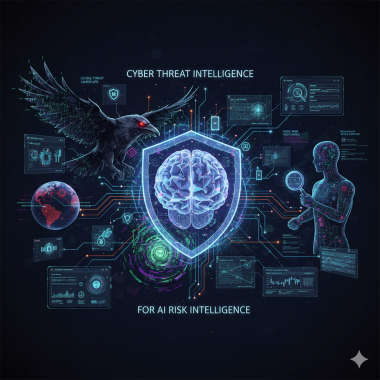
Cyber Threat Intelligence for AI Risk Intelligence
In 2026, Cyber Threat Intelligence (CTI) emerges as the critical discipline for managing AI Risk Intelligence, addressing the dual-edged sword of AI in cybersecurity. Adversaries wield agentic AI for automated attacks, model poisoning, adversarial inputs, and synthetic identity fraud, while enterprises deploy AI for defense, creating new vulnerabilities...
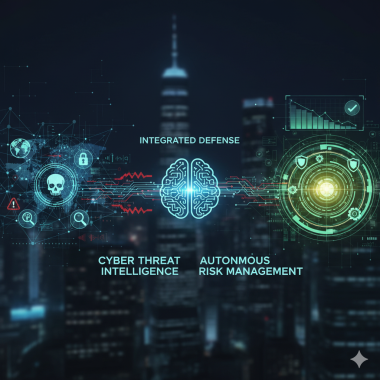
Cyber Threat Intelligence and Autonomous Risk Management
In 2026, Cyber Threat Intelligence (CTI) powers Autonomous Risk Management, enabling enterprises to navigate an era where AI agents outnumber humans 82:1 and execute decisions at machine speed. Adversaries deploy autonomous cybercrime agents for scaled attacks, data poisoning, identity deepfakes, and polymorphic malware while defenders harness agentic AI...
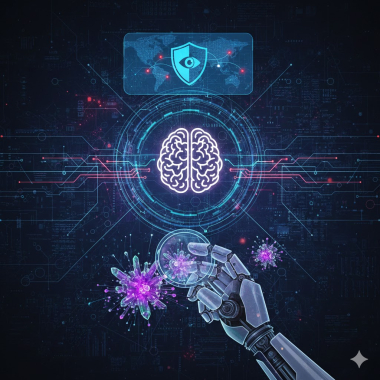
Cyber Threat Intelligence for Malware Reverse Engineering
In the escalating landscape of cyber warfare, cyber threat intelligence (CTI) serves as the strategic backbone for dissecting sophisticated malware through reverse engineering. Enterprises face relentless attacks where malware evolves daily, incorporating AI-driven obfuscation and polymorphic code to evade detection. Traditional antivirus...

CTI for Fake Social Media Accounts
Fake social media accounts pose a growing menace to enterprises, fueling disinformation, phishing attacks, and brand impersonation that erode trust and revenue. In 2025, platforms like LinkedIn reported over 156,000 fake profiles, with research showing these accounts as a primary vector for security breaches among professionals. Cyber Threat Intelligence...
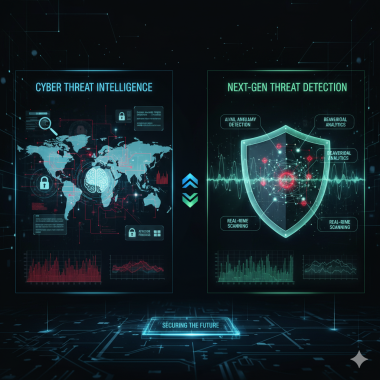
Cyber Threat Intelligence and Next-Gen Threat Detection
In 2026, Cyber Threat Intelligence (CTI) powers next-gen threat detection, shifting enterprises from reactive alerting to predictive, autonomous defense against AI-orchestrated attacks. Adversaries leverage agentic AI for polymorphic malware, real-time evasion, and supply chain manipulations, while CTI fuses global telemetry OSINT, dark web signals, and...

Cyber Threat Intelligence for Financial Institutions
Fake social media accounts pose a growing menace to enterprises, fueling disinformation, phishing attacks, and brand impersonation that erode trust and revenue. In 2025, platforms like LinkedIn reported over 156,000 fake profiles, with research showing these accounts as a primary vector for security breaches among professionals. Cyber Threat Intelligence...
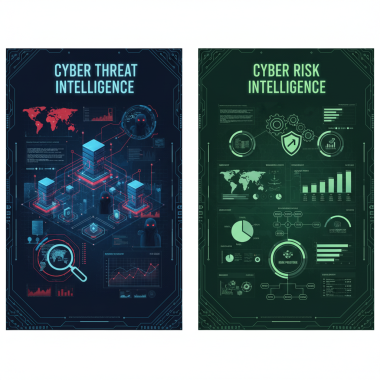
Cyber Threat Intelligence and Cyber Risk Intelligence
In 2026, Cyber Threat Intelligence (CTI) converges with Cyber Risk Intelligence to deliver enterprise-grade risk quantification amid agentic AI threats and quantum uncertainties. CTI provides adversary context TTPs, actor campaigns, and IoC evolution, while Cyber Risk Intelligence translates this into probabilistic business impacts: financial loss...
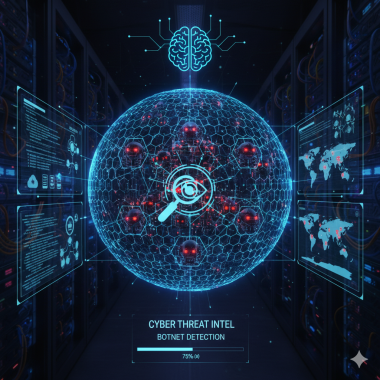
Cyber Threat Intelligence for Botnet Detection
Cyber threat intelligence has become essential for enterprises facing sophisticated botnet attacks in 2026. Botnets, networks of compromised devices controlled by cybercriminals, fuel DDoS assaults, data theft, and ransomware campaigns that disrupt operations and cost billions annually. As IoT proliferation and 5G expansion amplify vulnerabilities,...
No posts found
Write a review