- 3/8, North Pirerbag
- 60 Feet Main Road
- Mirpur, Dhaka 1216
- +880-967-8247365
- support@informatix.systems

Threat Intelligence Sharing Networks Evolution 2025
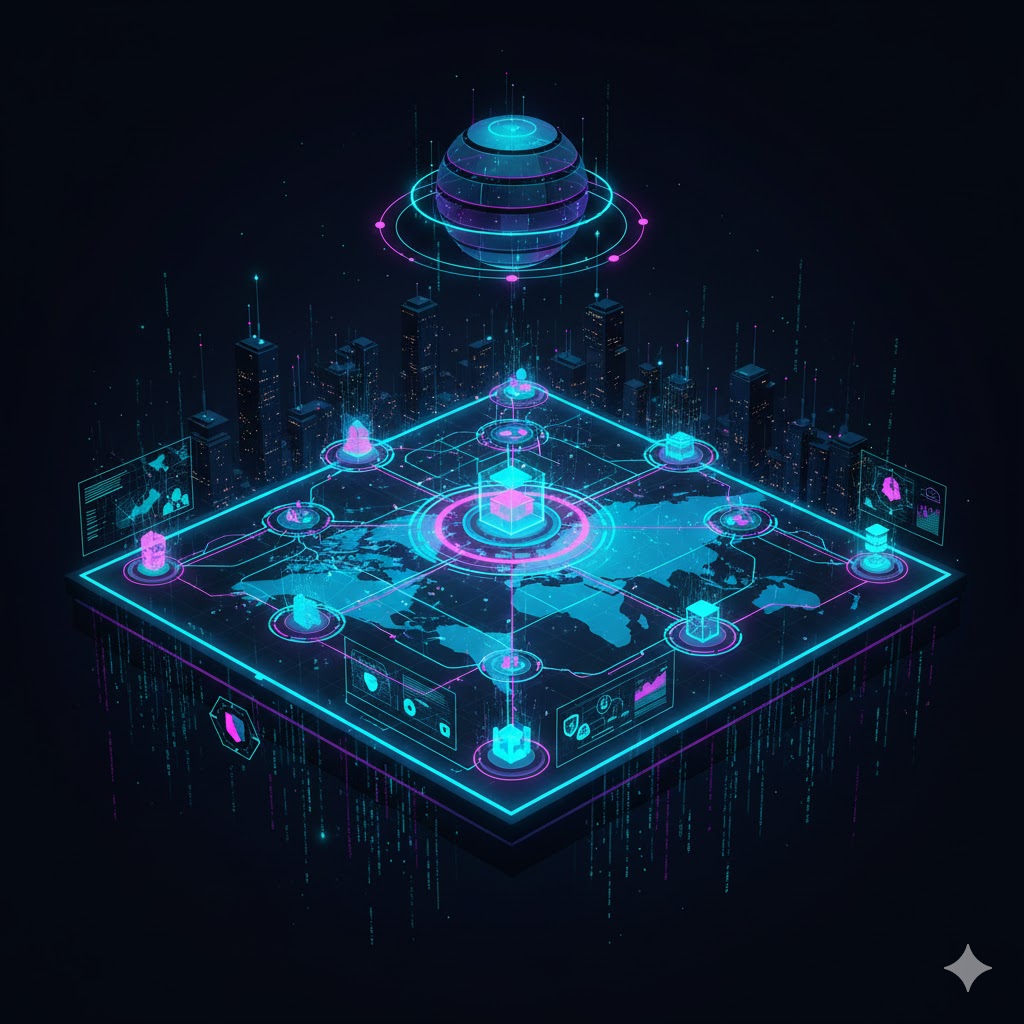
As the world becomes increasingly digital and interconnected, cybercrime is no longer a localized challenge; it’s an international battlefield. Threat actors now operate in highly coordinated ecosystems, leveraging automation, AI, and global networks to breach defenses faster than ever. To counter this, organizations, governments, and industries are collectively advancing Threat Intelligence Sharing Networks (TISNs) collaborative ecosystems that transcend borders, allowing real-time communication, shared analytics, and predictive intelligence capabilities. By 2025, threat intelligence sharing has evolved into an AI-driven, federated data model, empowering enterprises to respond to cyber risks as a unified digital defense grid. These networks are no longer isolated silos of information confined to specific sectors; instead, they have transformed into interoperable, standards-based systems that merge global data sources, automate detection, and synchronize organizational defenses across multiple industries. TISNs reduce response latency, improve visibility across the global threat landscape, and empower early alerting and collective risk mitigation strategies. This collaborative approach shifts the paradigm from reactive cybersecurity to proactive, shared resilience at Informatix.Systems, we provide cutting-edge AI, Cloud, and DevOps solutions for enterprise digital transformation. Our AI-powered threat intelligence and automation frameworks enable real-time collaboration, ensuring faster, smarter, and more secure global cyber defense operations. This extensive analysis explores the evolution of Threat Intelligence Sharing Networks in 2025, highlighting their structure, technologies, standards, governance, and strategic value for enterprises navigating the rapidly changing cybersecurity landscape.
What Are Threat Intelligence Sharing Networks (TISNs)?
Definition and Purpose
TISNs are structured ecosystems that facilitate the secure exchange of threat data indicators of compromise (IoCs), TTPs (Tactics, Techniques, Procedures), and attack signatures among organizations, governments, and allied entities.
Key Objectives:
- Collective Awareness: Identifying patterns across otherwise-isolated incidents.
- Shared Defense Posture: Enabling cooperative threat detection and mitigation.
- Global Data Correlation: Merging intelligence from governments, private companies, and CERTs.
- Resilience Building: Reducing the time from detection to response through live data feeds.
By 2025, TISNs will serve as the digital nervous system of modern cybersecurity, sensing, transmitting, and responding to global digital threats in real time.
Key Components of Modern Threat Intelligence Networks
Core Technical Framework:
- Data Aggregation Systems: Central repositories ingest multi-source cyber telemetry data.
- Analytic Engines: ML models classify, prioritize, and correlate incoming events.
- Sharing Protocols: Interoperability using STIX, TAXII 2.1, and OpenDXL standards.
- Trust Networks: Blockchain or DLT-backed nodes ensure authenticity and transparency.
- Visualization Dashboards: Centralized insights for situational awareness across sectors.
At Informatix.Systems, our TIS solutions combine analytics and governance to deliver adaptive data fusion and near real-time information exchange for enterprise SOCs and national CERTs.
The Role of AI and ML in Threat Intelligence Sharing
AI and ML are transforming threat intelligence from static data specimens into living, learning ecosystems.
Key AI Capabilities:
- Predictive Correlation: AI identifies potential relationships between global attack trends.
- Automated Event Summarization: NLP-based systems convert intelligence feeds into contextual threat reports.
- Anomaly Pattern Detection: Deep learning models uncover new attack methods and mutation patterns.
- Behavioral Clustering: Detects collaborative campaigns from separate but similar threat events.
AI-powered TISNs enable self-improving intelligence ecosystems, establishing the foundation for cognitive cyber defense worldwide.
Data Standards Shaping TISN Development
Common intelligence language is essential for effective collaboration.
Dominant Data Exchange Standards:
- STIX (Structured Threat Information Expression): Describes cyber threat data in machine-readable format.
- TAXII (Trusted Automated Exchange of Intelligence Information): Secure transport mechanism for threat data.
- CybOX (Cyber Observable eXpression): Standard for describing event patterns across environments.
- OpenC2: Facilitates communication between defense components and automated response workflows.
In 2025, organizations will increasingly implement AI-enhanced data annotation, allowing analytical engines to interpret complex patterns beyond human-readable metadata.
Privacy, Sovereignty, and Zero Trust in Threat Sharing
As collaboration grows, so does the emphasis on controlled data accessibility.
Zero Trust Principles in TISNs:
- Granular Access Control: Only verified participants have access to restricted threat data.
- Homomorphic Encryption: Encrypts data without limiting analytical capability.
- Data Sovereignty Compliance: Guarantees adherence to GDPR, CCPA, and cross-border data laws.
- Decentralized Exchange Models: Federated learning systems ensure local processing of sensitive information.
Informatix.Systems implements Zero Trust orchestration across its CTI exchange frameworks to preserve privacy while enabling global data collaboration at scale.
Blockchain and Federated Learning in TISNs
How Blockchain Enhances Collaboration:
- Immutable Data Trails: Secure historical records for auditability.
- Secure Tokenized Sharing: Encourages verified participation through digital certificates.
- Trust Validation: Each data source is blockchain-certified to prevent tampering.
Federated Learning:
- Promotes collaborative AI training without centralizing sensitive data.
- Ensures compliance while enabling models to learn from distributed intelligence.
Combining blockchain with federated learning creates self-governing, privacy-conscious ecosystems where members benefit from collective intelligence models without data leakage risks.
Economic and Strategic Value of Collaborative Intelligence
Threat-sharing networks are more than security frameworks; they are economic stabilizers that mitigate global cyber disruptions.
Strategic Benefits:
- Reduced Attack Costs: Shared knowledge leads to faster containment.
- Cross-Sector Awareness: Financial, healthcare, and energy sectors gain mutual protection.
- Enhanced National Defense: Government and private cooperation improve critical infrastructure security.
- Faster Innovation: Collaborative AI development accelerates detection and automation technologies.
By 2025, AI-enhanced TISNs are indispensable for global digital trust and economic continuity.
Interagency and Cross-Border Collaboration
Global cooperation between countries, industries, and regulatory bodies is paramount.
Examples of Modern CTI Collaboration:
- NATO CCDCOE: Collective defense operations across European and North American networks.
- Five Eyes Alliance: Intelligence collaboration among the U.S., UK, Canada, Australia, and New Zealand.
- EU ENISA Platforms: Frameworks for member-state cybersecurity intelligence sharing.
- Private Sector Partnerships: Cyber defense collaboration between tech giants and governments.
Such mechanisms demonstrate how collaborative intelligence reduces latency, enhances system visibility, and strengthens unified cyber deterrence.
Ethical AI Governance and Compliance in Threat Sharing
As AI becomes central to automated decision-making, ethical frameworks ensure fairness and transparency.
Best Practices in AI Governance:
- Explainable AI (XAI): Models must remain interpretable for policy-level accountability.
- Bias and Fairness Controls: Ensure even risk treatment across datasets.
- Ethical Disclosure Frameworks: Rules against exploitation of shared vulnerabilities.
- Regulatory Compliance: Alignment with ISO/IEC 42001 and NIST AI Governance models.
Informatix.Systems embed ethical governance policies to guarantee that AI enhancements in TISNs remain transparent, auditable, and bias‑free.
Multi-Cloud and Edge Threat Sharing Architectures
Modern digital infrastructure demands multi-cloud interoperability combined with edge computing intelligence.
Emerging Features:
- Edge Threat Nodes: Devices process intelligence near data sources to reduce latency.
- Multi-Cloud SIEM Integration: Pools intelligence across AWS, Azure, and Google Cloud.
- Cloud-Based SOAR Systems: Automate actions based on global risk contexts.
At Informatix.Systems, our multi-cloud orchestration frameworks, connect SOCs, cloud workloads, and IoT endpoints under unified systemic intelligence pipelines.
Challenges in Threat Intelligence Sharing
Despite advances, TISNs face persistent roadblocks.
Key Challenges:
- Data Privacy and Regulation Conflicts.
- Uneven Cyber Capabilities Between Partners.
- Trust Deficit Among Competitors.
- Standardization Lag Across Legacy Systems.
Overcoming These Challenges:
- Standardize global sharing protocols.
- Support non-competitive data cooperation models.
- Integrate blockchain-backed transparency layers.
- Encourage ethical governance in private‑sector collaborations.
Overcoming these hurdles is essential for sustainable collaboration and predictive global security.
The Future of TISNs (2025–2030)
Anticipated Innovations:
- Autonomous Collaboration: Fully automated AI-driven data exchanges.
- Quantum-Secure Threat Intelligence: Future-proof encryption for shared databases.
- Global AI Cyber Alliances: Synchronization of national AIs for threat prevention.
- Federated SOC Infrastructures: Shared resources optimizing cross-border detection.
- Generative Simulation Engines: Predictive cyber-attack simulation for global warning systems.
By 2030, TISNs will evolve into hyper-intelligent, collaborative ecosystems, acting as the backbone for collective digital defense across industries and jurisdictions. The 2025 evolution of Threat Intelligence Sharing Networks has redefined global cybersecurity strategy. As threats grow in sophistication, the solution lies not in isolated defense but in collective intelligence and federated automation. AI, blockchain, and federated learning are transforming TISNs into predictive, trustworthy, and scalable ecosystems that form the backbone of future digital resilience. At Informatix.Systems, we’re driving this transformation through AI-enabled, Cloud-native CTI platforms that allow real-time sharing, predictive insights, and seamless collaboration across organizations. Partner with Informatix.Systems today to future-proof your enterprise with adaptive intelligence-sharing capabilities built for tomorrow’s cyber challenges.
FAQs
What is a Threat Intelligence Sharing Network (TISN)?
It’s a collaborative cybersecurity framework that enables secure sharing of threat data among organizations, helping combat large-scale cyberattacks.
How does AI enhance cyber threat sharing?
AI automates pattern recognition, predictive insight extraction, and contextual correlation across vast global datasets.
Why are federated networks vital in 2025?
They enable real-time collaboration while preserving privacy, compliance, and data sovereignty.
What role does Informatix.Systems play in TISN innovation?
We deliver AI, Cloud, and DevOps-powered CTI solutions that support secure, scalable global collaboration systems.
How does blockchain improve threat intelligence sharing?
It ensures transparency, immutability, and participant accountability within distributed threat-sharing ecosystems.
What industries benefit most from TISNs?
Finance, healthcare, government, and manufacturing sectors require rapid detection and global collaboration for resilience.
Are TISNs compliant with global security laws?
Yes, through frameworks aligned with ISO 27001, GDPR, and NIST CSF principles.
What’s next for TISNs beyond 2025?
Expect quantum-ready infrastructures, autonomous threat-sharing AIs, and cross-industry federated defense clouds unifying cybersecurity worldwide.
No posts found
Write a review