- 3/8, North Pirerbag
- 60 Feet Main Road
- Mirpur, Dhaka 1216
- +880-967-8247365
- support@informatix.systems

Why Cyber Threat Intelligence Is Critical in 2025
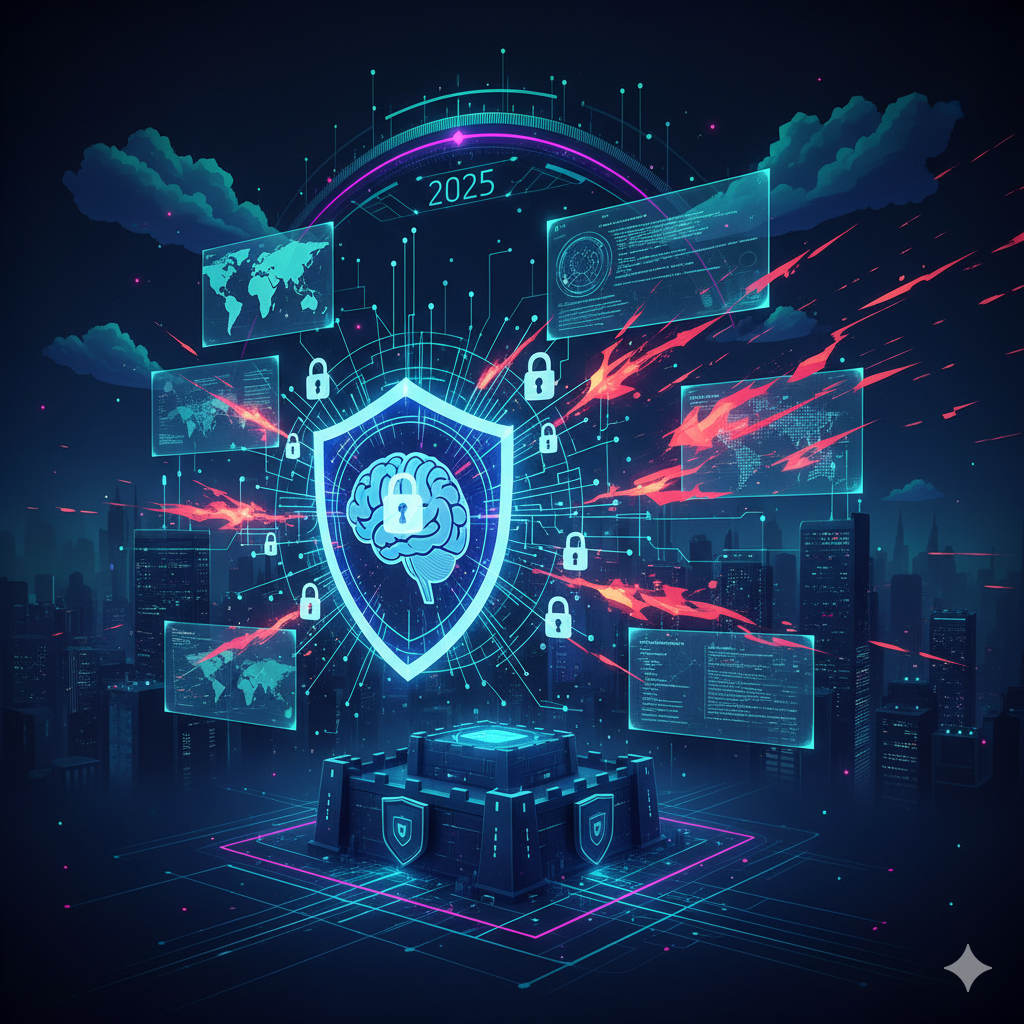
In 2026, the cyber threat landscape has transformed into a battleground where artificial intelligence empowers adversaries to launch autonomous, adaptive attacks at unprecedented speeds. Enterprises face escalating risks from AI-enhanced ransomware, deepfake phishing, and nation-state operations targeting critical infrastructure, with global cybercrime costs projected to exceed previous records. Cyber threat intelligence (CTI) emerges as the linchpin for proactive defense, delivering actionable insights that anticipate threats before they materialize. This intelligence, encompassing strategic, tactical, operational, and technical data, enables organizations to shift from reactive firefighting to predictive resilience. Businesses ignoring CTI risk devastating breaches; those embracing it reduce incident response times by up to 58% and optimize resource allocation. At Informatix.Systems, we provide cutting-edge AI, Cloud, and DevOps solutions for enterprise digital transformation, integrating CTI to fortify defenses against 2026's sophisticated threats. As regulations like DORA enforce cyber resilience and AI agents automate attacks, CTI's role intensifies. Enterprises must understand their types, benefits, and implementation to safeguard operations, comply with mandates, and maintain competitive edges. This article explores why CTI is non-negotiable in 2026, backed by trends, predictions, and strategies.
Evolving Cyber Threats in 2026
The 2026 threat environment features AI as the ultimate adversary, scaling phishing, reconnaissance, and exploits beyond human capabilities.
AI-Powered Attacks Dominate
Adversaries fully embrace agentic AI, automating attack lifecycles from reconnaissance to exfiltration. Prompt injection manipulates enterprise AI systems, bypassing safeguards. Deepfakes fuel fraud and social engineering, lowering entry barriers for cybercriminals.
Ransomware Evolution
Ransomware deploys AI bots for real-time vulnerability scanning and dynamic code mutation, evading detection. Groups like those from North Korea target high-value sectors, combining encryption with data extortion. Mean Time to Clean Recovery becomes the resilience metric.
Key 2026 Ransomware Stats:
- AI achieves exfiltration 100x faster than humans
- Targets cloud misconfigurations and unpatched systems
What Is Cyber Threat Intelligence?
Cyber threat intelligence (CTI) collects, analyzes, and disseminates data on threats, including actors' tactics, techniques, and procedures (TTPs).
Core Components of CTI
CTI follows a lifecycle: planning, collection, processing, analysis, dissemination, and feedback. It transforms raw data into actionable insights for SOC teams. At Informatix.Systems, we provide cutting-edge AI, Cloud, and DevOps solutions for enterprise digital transformation, embedding CTI into these workflows.
Strategic vs. Tactical CTI
- Strategic CTI: High-level trends for executives, covering geopolitical motives
- Tactical CTI: IOCs like IPs and hashes for immediate blocking
- Operational CTI: Campaign details on threat groups
- Technical CTI: Malware signatures and exploits
Types of Cyber Threat Intelligence
CTI categorizes into four types, each serving distinct enterprise needs in 2026.
Strategic Intelligence
Provides long-term landscape views, informing board-level decisions on risk and investments. Analyzes economic and geopolitical drivers behind threats.
Tactical Intelligence
Delivers IOCs for SOC hunting and blocking. Essential for reducing dwell time in AI-driven attacks.
Implementation Tips:
Operational and Technical
Operational tracks TTPs; technical offers granular exploit data. Fusion of all types yields a comprehensive defense.
Why CTI Is Critical for Enterprises
CTI delivers multifaceted benefits, turning threats into strategic advantages.
Proactive Defense and Prediction
Anticipates attacks via pattern analysis, cutting response times by 58%. Enables predictive modeling over reaction.
Resource Optimization
Prioritizes threats, reducing alert fatigue. Allocates budgets to high-impact areas like Zero Trust.
Business Benefits:
- Informed decision-making for resilience planning
- Compliance with DORA and NIST
- Fraud prevention through timely insights
Market growth underscores demand: CTI valued at $10.5B in 2026, CAGR 13.5%.
AI's Dual Role in CTI
AI revolutionizes CTI, correlating global data for hidden campaign detection.
Enhancing Threat Detection
AI fuses internal/external feeds, revealing coordinated attacks across sectors. Reduces manual analysis, focusing analysts on judgment.
Countering AI Threats
Defenders deploy AI for anomaly detection and automated playbooks. Vendor consolidation streamlines platforms. At Informatix.Systems, we provide cutting-edge AI, Cloud, and DevOps solutions for enterprise digital transformation.
2026 AI-CTI Trends:
Nation-State Threats and CTI
CRINK actors (China, Russia, Iran, North Korea) prioritize pre-positioned backdoors in CNI and AI ecosystems.
Key Actors in 2026
- China: Supply chain and IP theft
- Russia: Geopolitical cyber ops
- Iran/North Korea: Ransomware and espionage
CTI maps these TTPs, enabling targeted defenses. Election-year deepfakes surge.
Implementing CTI in Your Organization
Building a CTI program requires structured steps.
10 Steps to CTI Maturity
- Define PIRs with stakeholders
- Establish a dedicated team/reporting
- Collect from diverse sources
- Automate processing with AI
- Analyze via the lifecycle model
SOC and SIEM Integration
Automate IOC ingestion into SIEM/SOAR for real-time response. OpenCTI normalizes feeds. At Informatix.Systems, we provide cutting-edge AI, Cloud, and DevOps solutions for enterprise digital transformation.
CTI for Ransomware Defense
Ransomware demands specialized intelligence.
Predictive Mitigation
Track group TTPs, backup targeting. AI monitors for dynamic mutations.
Best Practices:
Regulatory Compliance and CTI
2026 regulations mandate CTI for resilience.
DORA and NIST Enforcement
DORA requires TLPT; CTI supports audits. NIST elevates identity security.
Compliance Benefits
Meets reporting needs, avoids fines. Informs ESG cyber risks.
Future of CTI Beyond 2026
Vendor consolidation and AI augmentation define evolution.
Emerging Trends
Challenges in CTI Adoption
Overcome silos, skills gaps, and data overload.
Common Hurdles
Solutions:
Cyber threat intelligence stands as the cornerstone of 2026 cybersecurity, countering AI adversaries, ransomware, and nation-states with predictive power. Enterprises leveraging CTI achieve faster responses, optimized resources, and compliance resilience, transforming threats into opportunities. Ready to fortify your defenses? Contact Informatix.Systems today for tailored AI, Cloud, and DevOps solutions. Schedule a free CTI assessment at https://informatix.systems and secure your digital future now.
FAQs
What is cyber threat intelligence?
CTI collects and analyzes threat data to enable proactive defense against attacks.
Why is CTI critical in 2026?
AI-driven threats and ransomware demand anticipation over reaction; CTI reduces response by 58%.
How does AI enhance CTI?
AI correlates data for campaign detection and automates responses.
What are the types of CTI?
Strategic, tactical, operational, and technical each target different needs.
How to integrate CTI with SIEM?
Automate IOC feeds via platforms like OpenCTI for real-time alerts.
Can CTI help with ransomware?
Yes, tracks TTPs and predicts targeting for resilience.
What regulations require CTI in 2026?
DORA and NIST enforce resilience testing and reporting.
How much does the CTI market grow in 2026?
No posts found
Write a review