- 3/8, North Pirerbag
- 60 Feet Main Road
- Mirpur, Dhaka 1216
- +880-967-8247365
- support@informatix.systems

Informatix Systems Automated Patch Management
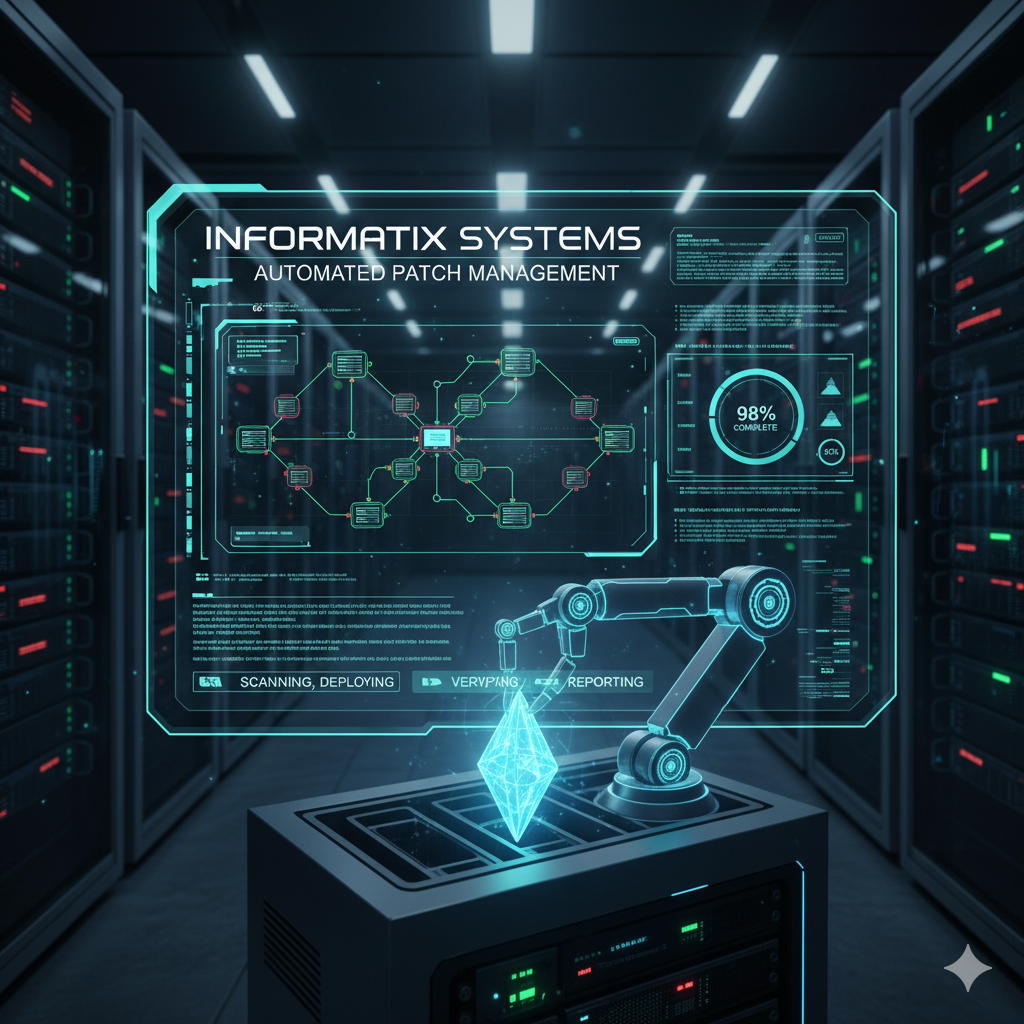
In today’s hyper-connected digital landscape, organizations face relentless cyber threats and an ever-growing number of software vulnerabilities. Manual patch management is no longer viable for enterprises with hundreds or thousands of endpoints, servers, and applications. Automated patch management has emerged as a cornerstone of modern IT security and operational resilience, ensuring that systems remain up-to-date, secure, and compliant with minimal human intervention. At Informatix.Systems, we provide cutting-edge AI, Cloud, and DevOps solutions for enterprise digital transformation. Our automated patch management platform is designed to streamline vulnerability remediation, reduce operational risk, and free IT teams to focus on strategic initiatives rather than repetitive, error-prone tasks.
Why Automated Patch Management Matters
The Evolving Threat Landscape
Cybercriminals are increasingly targeting unpatched systems, exploiting known vulnerabilities to gain unauthorized access, deploy ransomware, or steal sensitive data. According to recent industry reports, the average time between a vulnerability disclosure and the first attack is now less than 24 hours. Automated patch management is essential for closing this window of exposure and maintaining a robust security posture.
Business Impact of Patching Delays
- Increased risk of data breaches and regulatory fines
- Operational downtime and lost productivity
- Reputational damage and loss of customer trust.
Automated patch management mitigates these risks by ensuring rapid, consistent, and reliable deployment of security updates across all systems.
Key Benefits of Automated Patch Management
Enhanced Security Posture
- Proactive vulnerability remediation: Automated systems detect and deploy patches as soon as they are released, minimizing the attack surface.
- Zero-day threat mitigation: Rapid response to critical vulnerabilities reduces the risk of exploitation.
- Consistent security across all endpoints: Automation ensures no device is left unpatched, maintaining a uniform security baseline.
Operational Efficiency
- Reduced manual workload: IT teams spend less time on repetitive patching tasks and more on strategic projects.
- Scalability: Automated solutions can manage thousands of endpoints across diverse environments, from desktops to servers and cloud instances.
- Minimized downtime: Scheduled and tested patch deployments reduce disruptions to business operations.
Compliance and Reporting
- Regulatory compliance: Automated patch management helps organizations meet requirements for GDPR, HIPAA, NIS2, and other standards by providing detailed audit trails and reports.
- Simplified reporting: Centralized dashboards and automated reporting tools streamline compliance audits and executive reviews.
How Automated Patch Management Works
The Patch Management Lifecycle
- Patch Discovery: Automated tools scan networks for missing patches, identifying vulnerabilities across all systems and applications.
- Patch Assessment: Patches are evaluated for relevance, criticality, and potential impact on business operations.
- Patch Testing: Updates are tested in a controlled environment to ensure compatibility and stability before deployment.
- Patch Deployment: Approved patches are automatically deployed according to predefined schedules and policies.
- Reporting and Monitoring: Comprehensive reports track patch deployment status, compliance, and system health.
Automation Features
- Scheduled deployments: Patches are deployed during off-peak hours to minimize disruption.
- Emergency patching: Critical updates are prioritized and deployed immediately.
- Rollback capabilities: Faulty patches can be automatically rolled back to maintain system stability.
- Customizable policies: Organizations can tailor patching schedules, approval workflows, and deployment criteria to their specific needs.
Informatix Systems Automated Patch Management Solution
Overview
Informatix Systems Automated Patch Management is a comprehensive platform that integrates advanced automation, AI-driven analytics, and centralized control to deliver enterprise-grade patch management. Our solution supports a wide range of operating systems, applications, and cloud environments, ensuring seamless protection across your entire digital infrastructure.
Key Features
- Multi-platform support: Windows, Linux, macOS, and third-party applications.
- AI-powered patch prioritization: Intelligent algorithms prioritize patches based on risk, impact, and business criticality.
- Centralized management console: Single pane of glass for patch discovery, deployment, and reporting.
- Automated compliance enforcement: Ensure continuous compliance with industry regulations and internal policies.
- Real-time monitoring and alerts: Proactive notifications for patch deployment status, vulnerabilities, and compliance issues.
Integration with Informatix Systems Ecosystem
- AI and Cloud integration: Leverage Informatix Systems’ AI and cloud capabilities for predictive patching, anomaly detection, and scalable deployment.
- DevOps automation: Seamless integration with CI/CD pipelines for automated patching in development and production environments.
- Security orchestration: Coordinate patch management with other security controls, such as endpoint protection and vulnerability management.
Best Practices for Automated Patch Management
Assess Your Current Patch Management Practices
- Conduct a thorough audit of your existing patch management processes and identify gaps and inefficiencies.
- Evaluate the scope of your environment, including endpoints, servers, and cloud instances.
Choose the Right Automated Patch Management Solution
- Select a solution that supports your operating systems, applications, and compliance requirements.
- Consider scalability, ease of integration, and vendor support.
Create a Comprehensive Patch Management Policy
- Define patching schedules, approval workflows, and deployment criteria.
- Establish roles and responsibilities for patch management.
Set Up Patch Testing and Validation Procedures
- Test patches in a controlled environment before deploying to production.
- Validate compatibility with business-critical applications.
Implement Automated Patch Deployment
- Configure automated deployment schedules and policies.
- Prioritize critical patches and enable emergency patching for zero-day vulnerabilities.
Monitor and Report on Patch Deployment Status
- Use centralized dashboards and reporting tools to track patch deployment status and compliance.
- Generate regular reports for executive review and compliance audits.
Review and Optimize the Process Regularly
- Continuously review and optimize your patch management process based on feedback and changing requirements.
- Stay updated on new threats, vulnerabilities, and best practices.
Real-World Impact
Financial Services
- Challenge: Manual patch management led to frequent compliance violations and security incidents.
- Solution: Implemented Informatix Systems Automated Patch Management.
- Results: Reduced patch deployment time by 80%, achieved 100% compliance, and eliminated security incidents related to unpatched systems.
Healthcare
- Challenge: Large, distributed environment with diverse endpoints and strict regulatory requirements.
- Solution: Deployed Informatix Systems Automated Patch Management with centralized control and AI-driven prioritization.
- Results: Streamlined patching across 10,000+ endpoints, reduced manual workload by 70%, and maintained continuous compliance with HIPAA.
Advanced Automation and AI in Patch Management
AI-Powered Patch Prioritization
- Risk-based prioritization: AI algorithms analyze vulnerability data, threat intelligence, and business impact to prioritize patches.
- Predictive patching: Machine learning models predict future vulnerabilities and recommend proactive patching strategies.
Automated Compliance Enforcement
- Continuous compliance: Automated systems enforce patching policies and generate detailed audit trails for regulatory compliance.
- Real-time alerts: Proactive notifications for compliance violations and patch deployment issues.
Security Orchestration
- Integrated security controls: Coordinate patch management with endpoint protection, vulnerability management, and incident response.
- Automated workflows: Streamline security operations with automated patching, remediation, and reporting workflows.
Challenges and Considerations
Common Challenges
- Complex environments: Managing patches across diverse operating systems, applications, and cloud environments can be challenging.
- Patch compatibility: Ensuring patches do not disrupt business-critical applications requires thorough testing.
- User disruption: Minimizing downtime and user disruption during patch deployment is critical.
Best Practices for Overcoming Challenges
- Comprehensive testing: Test patches in a controlled environment before deploying to production.
- Scheduled deployments: Deploy patches during off-peak hours to minimize disruption.
- Rollback capabilities: Enable automatic rollback for faulty patches to maintain system stability.
Future Trends in Automated Patch Management
Increased Automation and AI
- AI-driven patching: Advanced AI and machine learning will enable predictive patching, anomaly detection, and automated remediation.
- Self-healing systems: Future systems will automatically detect, patch, and remediate vulnerabilities without human intervention.
Cloud-Native Patch Management
- Cloud integration: Patch management solutions will increasingly integrate with cloud platforms for seamless protection of cloud workloads.
- Hybrid environments: Solutions will support hybrid environments, managing patches across on-premises and cloud systems.
Enhanced Security Orchestration
- Integrated security controls: Patch management will be tightly integrated with other security controls, such as endpoint protection and vulnerability management.
- Automated workflows: Security operations will be streamlined with automated patching, remediation, and reporting workflows.
Automated patch management is no longer a luxury; it’s a necessity for enterprises seeking to protect their digital assets, maintain compliance, and optimize operational efficiency. At Informatix.Systems, we provide cutting-edge AI, Cloud, and DevOps solutions for enterprise digital transformation, including our comprehensive automated patch management platform. By leveraging automation, AI, and centralized control, organizations can achieve rapid, consistent, and reliable patch deployment across all systems and applications. This not only enhances security and compliance but also frees IT teams to focus on strategic initiatives that drive business growth. Ready to transform your patch management process? Contact Informatix.Systems today to learn more about our automated patch management solutions and schedule a personalized demo.
FAQs
What is automated patch management?
Automated patch management is the process of using software tools to automatically detect, download, test, and deploy patches to systems and applications, ensuring they remain up-to-date and secure.
Why is automated patch management important?
Automated patch management is crucial for maintaining a strong security posture, reducing the risk of data breaches, ensuring compliance with regulations, and minimizing operational downtime.
How does automated patch management work?
Automated patch management involves scanning for missing patches, assessing their relevance and criticality, testing them in a controlled environment, deploying them according to predefined schedules, and monitoring the deployment status.
What are the benefits of automated patch management?
Benefits include enhanced security, operational efficiency, reduced manual workload, scalability, minimized downtime, and simplified compliance and reporting.
Can automated patch management handle different operating systems and applications?
Yes, modern automated patch management solutions support a wide range of operating systems (Windows, Linux, macOS) and third-party applications.
How does automated patch management ensure compliance?
Automated patch management enforces patching policies, generates detailed audit trails and reports, and provides real-time alerts for compliance violations.
What are the best practices for automated patch management?
Best practices include assessing current practices, choosing the right solution, creating a comprehensive policy, setting up testing procedures, implementing automated deployment, monitoring and reporting, and regularly reviewing and optimizing the process.
What future trends are shaping automated patch management?
Future trends include increased automation and AI, cloud-native patch management, enhanced security orchestration, and self-healing systems.