- 3/8, North Pirerbag
- 60 Feet Main Road
- Mirpur, Dhaka 1216
- +880-967-8247365
- support@informatix.systems

Informatix Systems Predictive Cyber Risk Analytics
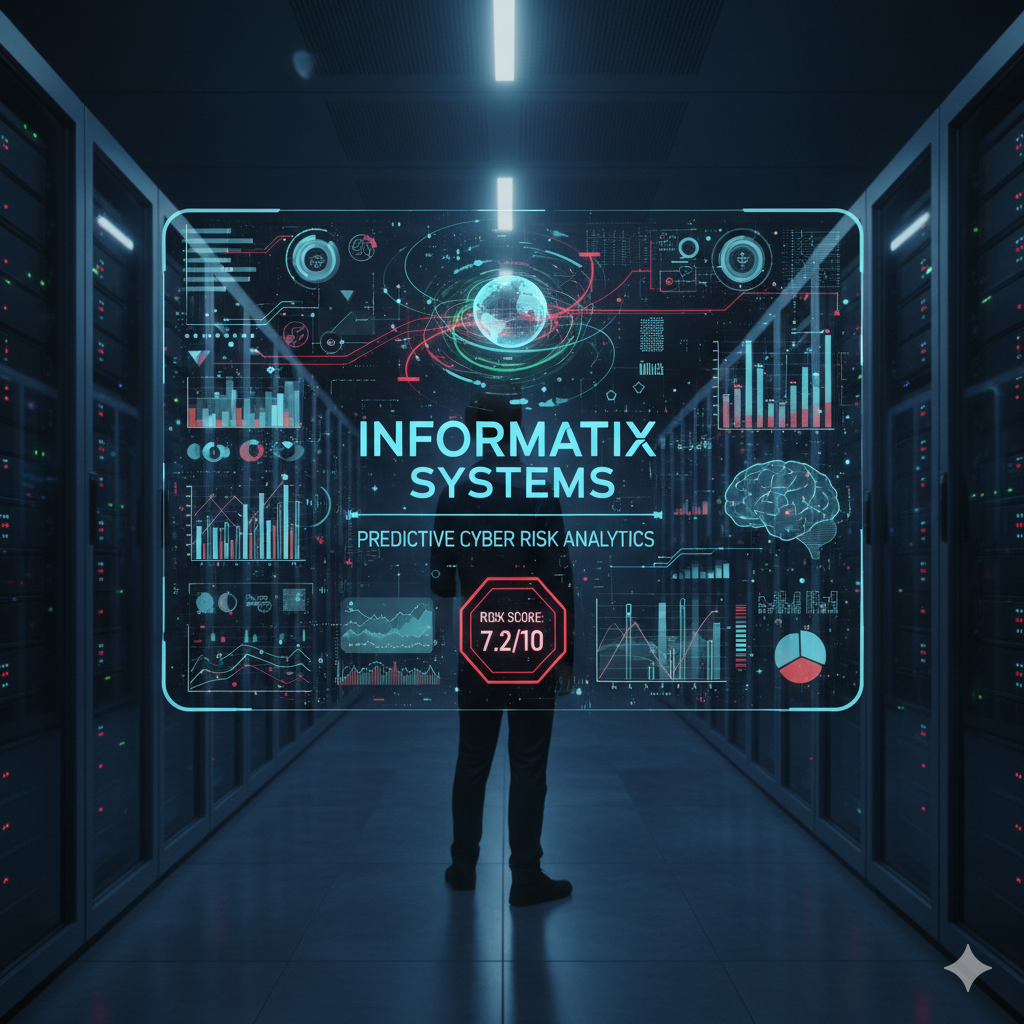
In the modern digital economy, enterprises face an ever-evolving cyber threat landscape from sophisticated ransomware and insider threats to massive data breaches and supply chain attacks. Traditional cybersecurity, reliant on reactive detection, is no longer sufficient in anticipating and mitigating risks before damage occurs. Predictive cyber risk analytics represents a transformative leap in cybersecurity, using AI, machine learning, and cloud capabilities to forecast cyber threats, enabling enterprises to take proactive defensive measures. At Informatix.Systems, we provide cutting-edge AI, Cloud, and DevOps solutions for enterprise digital transformation. Our predictive cyber risk analytics empowers businesses to detect early warning signals and predict potential cyberattacks with remarkable accuracy. This article explores how Informatix.Systems leverage predictive analytics to defend enterprises, reduce risk exposure, and enhance cyber resilience.
Understanding Predictive Cyber Risk Analytics
What is Predictive Cyber Risk Analytics?
Predictive cyber risk analytics is the application of advanced analytics, artificial intelligence (AI), and machine learning algorithms to large sets of cybersecurity data. It identifies patterns, anomalies, and signals that indicate potential future cyber threats before these attacks fully materialize, allowing organizations to act ahead of time.
Key Components
- Data Collection: Aggregating data from network logs, endpoint detection, threat intelligence feeds, and cloud environments.
- Machine Learning Models: Algorithms trained to detect abnormal behavioral patterns and risk indicators.
- Threat Forecasting: Predicting the likelihood, timing, and potential severity of attacks.
- Risk Scoring: Assigning risk scores to vulnerabilities and assets based on prediction outputs.
Importance in Modern Cyber Defense
Predictive analytics transcends limitations of traditional defense by focusing on proactive threat intelligence, accelerating detection and response times, and optimizing incident management resources.
Informatix Systems’ Approach to Predictive Cyber Risk Analytics
Holistic AI-Driven Framework
Informatix.Systems integrates AI, cloud computing, and DevOps methodologies to deliver a comprehensive predictive analytics platform. This framework ingests diverse data streams in real-time, enabling continuous monitoring and adaptive learning.
Cloud-Enabled Scalability and Security
With robust cloud infrastructure, Informatix.Systems ensure scalable and highly available analytics capabilities. Our secure cloud platforms empower enterprises to perform deep risk analysis from anywhere without compromising data integrity.
Real-Time Threat Intelligence Fusion
By correlating internal security data with global threat intelligence, we provide enterprises with enriched context for predictions, making threat alerts more accurate and actionable.
Benefits of Predictive Cyber Risk Analytics for Enterprises
Enhanced Threat Detection
- Early identification of unusual user behavior and network traffic anomalies.
- Machine learning pinpointing emerging attack vectors before exploitation.
Reduced Incident Response Times
- Automated alerts and workflows accelerate containment efforts.
- Data-driven prioritization focuses resources on the highest-risk threats.
Cost Savings and Risk Reduction
- Minimized the impact of cyberattacks by preventing large-scale breaches.
- Optimized security spending through targeted risk mitigation.
Improved Compliance and Reporting
- Automated documentation supports regulatory and audit requirements.
- Continuous risk assessment aligns with industry cybersecurity standards.
Core Technologies Powering Informatix Systems’ Analytics
Artificial Intelligence and Machine Learning
Utilizing supervised and unsupervised learning to model behaviors and detect threats with AI algorithms.
Big Data Analytics
Processing and analyzing vast volumes of security logs and network data efficiently.
Behavioral Analytics
Analyzes user and entity behavior to identify deviations suggesting potential insider threats or compromised credentials.
Cloud Computing
High availability and elastic computing power enable real-time analytics and data storage.
Real-World Applications and Impact
Insider Threat Detection
Predictive models identify employees or contractors with unusual access patterns indicating potential data misuse.
Advanced Persistent Threat (APT) Identification
Detects stealthy and prolonged attacks by correlating subtle network and endpoint signals.
Ransomware Spread Prediction
Predicts ransomware infection vectors and early-stage behavior to prevent lateral movement.
Cloud Security Risk Forecasting
Analyzes cloud service logs to predict and prevent infrastructure misconfigurations and exploitations.
The Role of DevOps in Enhancing Cyber Risk Analytics
Continuous Integration and Delivery (CI/CD) for Security Features
Informatix.Systems employs DevOps pipelines to continuously update prediction models and deploy new security rules.
Automated Incident Response
DevOps automation facilitates quick threat containment with predefined playbooks triggered by predictive alerts.
Collaboration Between Security and Operations Teams
Bridging development and operations improves defense strategies by integrating predictive insights into daily workflows.
Steps to Implement Predictive Cyber Risk Analytics in Your Enterprise
Assess Current Cybersecurity Posture
Evaluate existing security infrastructure and identify data sources for analytics integration.
Define Clear Objectives
Set goals such as reducing detection times, improving risk scoring accuracy, or enhancing compliance.
Choose the Right Technology Partner
Select vendors like Informatix.Systems specializing in AI-powered predictive analytics with cloud scalability.
Deploy Analytics Platform
Integrate with enterprise IT systems, cloud environments, and threat intelligence feeds.
Train and Tune Models
Continuously refine predictive models using enterprise-specific data.
Monitor and Improve
Track analytics outcomes, adjust tactics, and evolve defenses against emerging threats.
Challenges in Predictive Cyber Risk Analytics and Solutions
Data Quality and Volume
Huge volumes of security data require robust processing. Informatix.Systems use advanced big data platforms to ensure quality and efficiency.
False Positives
Optimizing machine learning models reduces noise and improves alert relevance.
Skills Shortage
Our platform provides intuitive dashboards and automated actions, reducing dependency on scarce cybersecurity expertise.
Integration Complexity
Seamless cloud and on-premise integration simplifies deployment across diverse enterprise environments.
Future Trends in Predictive Cyber Risk Analytics
AI-Driven Autonomous Cyber Defense
Increasingly, AI systems will autonomously detect, predict, and neutralize cyberthreats without human intervention.
Integration with Blockchain for Security
Leveraging decentralized ledgers enhances the trustworthiness of security data feeding predictive models.
Quantum Computing Impact
Quantum algorithms could vastly accelerate predictive computations and cryptanalysis defenses.
Greater Focus on Privacy-Preserving Analytics
Implementing federated learning and differential privacy techniques to balance analytics power with data confidentiality.
Why Choose Informatix Systems for Predictive Cyber Risk Analytics?
- Proven expertise in AI, Cloud, and DevOps integration for cybersecurity.
- Comprehensive, scalable solutions tailored for diverse enterprise needs.
- 24/7 global infrastructure ensuring performance, availability, and resilience.
- Dedicated security monitoring, compliance assistance, and expert support.
- Commitment to innovation backed by continuous research and development.
At Informatix.Systems, we provide cutting-edge AI, Cloud, and DevOps solutions for enterprise digital transformation.Informatix Systems Predictive Cyber Risk Analytics empowers enterprises to stay ahead in a complex cyber threat landscape through AI-driven foresight and real-time intelligence fusion. By adopting predictive analytics, organizations can reduce risks, optimize resources, and ensure business continuity with confidence. As cyber threats continue to evolve, Informatix.Systems remains at the forefront of innovation, delivering solutions that transform cybersecurity from reactive defense to proactive risk anticipation. Transform your enterprise cybersecurity today with Informatix.Systems Predictive Cyber Risk Analytics. Contact our experts for a consultation and unlock the power of AI-driven cyber risk foresight to safeguard your digital future.
FAQs
What is predictive cyber risk analytics?
Predictive cyber risk analytics uses AI and machine learning to analyze security data and forecast potential cyber threats before they occur, enabling proactive defense.
How does Informatix Systems use AI in cybersecurity?
Informatix.Systems integrates AI algorithms and real-time data to detect threat patterns, automate risk scoring, and accelerate incident response.
Can predictive analytics reduce cybersecurity costs?
Yes, by identifying high-risk threats earlier, predictive analytics helps prevent costly breaches and optimizes the allocation of security resources.
Is cloud infrastructure important for predictive cyber risk analytics?
Absolutely. Cloud computing provides the scalability and computing power required for processing large volumes of security data in real-time.
How does predictive cyber risk analytics improve incident response times?
Predictive analytics automates threat detection and prioritization, enabling security teams to respond swiftly to emerging risks.
What challenges should enterprises expect when implementing predictive analytics?
Enterprises may face data quality issues, false positives, integration complexity, and skills shortages, all of which Informatix.Systems help address.
What industries benefit most from predictive cyber risk analytics?
Finance, healthcare, retail, manufacturing, and any sector with critical digital assets can greatly enhance security posture with predictive analytics.
How often should predictive models be updated?
Models require continuous training and tuning to adapt to evolving threats and enterprise-specific environments.