Anmelden | Registrieren
Sign in to get more opportunities
- 3/8, North Pirerbag
- 60 Feet Main Road
- Mirpur, Dhaka 1216
- +880-967-8247365
- support@informatix.systems

Common Kubernetes Mistakes and How to Avoid Them
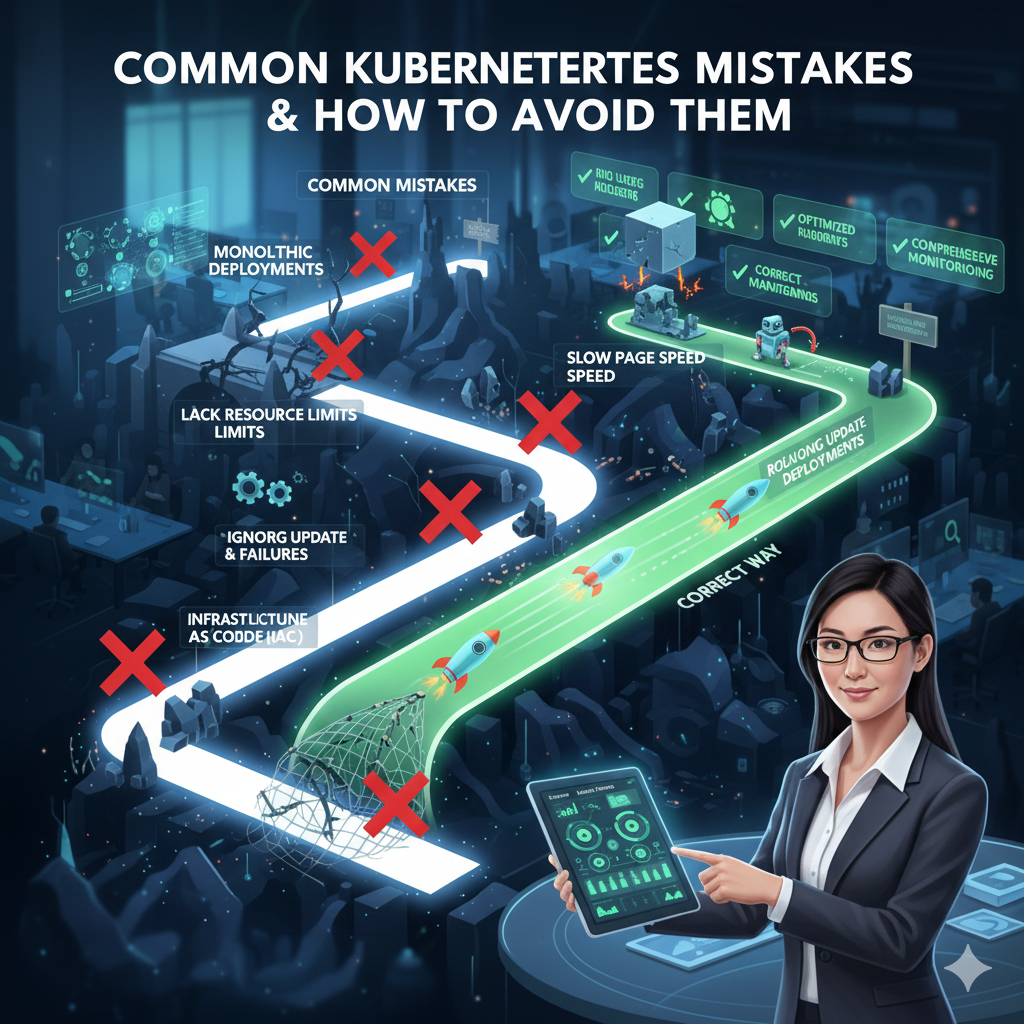
Kubernetes has become the industry-standard platform for container orchestration, revolutionizing how modern businesses deploy, scale, and manage their applications. However, as powerful as Kubernetes is, many organizations face challenges when implementing and operating it. Missteps can lead to security vulnerabilities, downtime, performance bottlenecks, and increased costs.
This extensive guide will cover the most common Kubernetes mistakes companies make and provide actionable advice on how to avoid them. Whether you are just starting with Kubernetes or are looking to optimize your existing clusters, this resource from Informatix Systems will help you navigate pitfalls and make the most of your Kubernetes deployments.
Why Kubernetes Mistakes Matter
Kubernetes simplifies container orchestration, but with that power comes complexity. A poorly configured cluster or suboptimal practices can result in:
-
Application outages
-
Security breaches
-
Increased operational costs
-
Slow deployments and scaling
-
Difficult troubleshooting
Understanding common pitfalls and how to avoid them is key for businesses to maximize Kubernetes’ benefits.
Neglecting Proper Resource Requests and Limits
What Happens
Many teams either don’t set resource requests and limits or misconfigure them. This leads to resource contention, pod evictions, and unstable cluster behavior.
How to Avoid
-
Define appropriate CPU and memory requests/limits for every pod.
-
Use monitoring tools to analyze resource consumption trends.
-
Adjust limits iteratively based on observed workloads.
-
Implement Quality of Service (QoS) tiers using resource requests and limits.
Ignoring Security Best Practices
What Happens
Misconfigured permissions, open network policies, or exposed dashboards leave clusters vulnerable to attacks.
How to Avoid
-
Enable Role-Based Access Control (RBAC) and follow the principle of least privilege.
-
Use network policies to restrict pod-to-pod communication.
-
Regularly scan container images for vulnerabilities.
-
Avoid running containers as root.
-
Secure Kubernetes API server access with TLS and authentication.
Overcomplicating Kubernetes Architecture
What Happens
Attempting to run overly complex microservices or unnecessary components can create maintenance headaches.
How to Avoid
-
Start with a simple architecture and add complexity as needed.
-
Use namespaces to isolate workloads logically.
-
Adopt a phased migration to microservices instead of “big bang” rewrites.
-
Regularly review components and remove unused ones.
Poor Monitoring and Logging Implementation
What Happens
Without good visibility, detecting failures or performance issues becomes guesswork.
How to Avoid
-
Implement centralized logging with tools like Elasticsearch, Fluentd, and Kibana (EFK) or Loki.
-
Use Prometheus and Grafana for cluster and application metrics.
-
Set up alerting on critical events and thresholds.
-
Regularly review logs and metrics to identify trends.
Inadequate Cluster Autoscaling Configuration
What Happens
Clusters either run out of capacity, leading to failed deployments, or overprovision resources, inflating costs.
How to Avoid
-
Configure Horizontal Pod Autoscaler (HPA) based on real workload metrics.
-
Use Cluster Autoscaler to adjust node counts automatically.
-
Monitor autoscaler actions and tweak thresholds.
-
Consider using custom metrics for autoscaling.
Not Using Namespaces Effectively
What Happens
Without namespaces, managing multi-team or multi-project clusters becomes chaotic, leading to resource conflicts.
How to Avoid
-
Use namespaces to segregate environments (e.g., dev, test, prod) and teams.
-
Apply resource quotas and limit ranges per namespace.
-
Use namespace-based policies for security and access control.
Mismanaging Persistent Storage
What Happens
Improper storage configuration can cause data loss, poor performance, or pod scheduling failures.
How to Avoid
-
Use Kubernetes Storage Classes tailored to your infrastructure.
-
Prefer dynamic provisioning over static volumes where possible.
-
Understand the difference between persistent volume claims (PVCs) and ephemeral storage.
-
Backup persistent volumes regularly.
Ignoring Network Policies and Security Groups
What Happens
Unrestricted pod communication risks lateral movement during attacks and data leakage.
How to Avoid
-
Define restrictive network policies that allow only necessary communication.
-
Segment traffic using labels and selectors.
-
Regularly audit network policies for gaps.
Insufficient Backup and Disaster Recovery Planning
What Happens
Clusters can face catastrophic data loss or downtime without proper backup and DR strategies.
How to Avoid
-
Implement regular etcd backups and test recovery procedures.
-
Backup persistent volumes and configuration manifests.
-
Use tools like Velero for backup and migration.
-
Develop and rehearse disaster recovery plans.
Using Outdated Kubernetes Versions
What Happens
Running deprecated Kubernetes versions exposes your cluster to bugs and security vulnerabilities.
How to Avoid
-
Stay updated with the Kubernetes release cycle.
-
Test upgrades in staging environments.
-
Automate cluster upgrades where possible.
-
Monitor Kubernetes deprecation notices and adapt manifests.
Not Automating Deployments and Rollbacks
What Happens
Manual deployments increase errors and slow down release cycles.
How to Avoid
-
Adopt CI/CD pipelines with automated Kubernetes manifests deployments.
-
Use tools like Helm or Kustomize to manage configurations.
-
Implement health checks and readiness probes for smooth rollouts.
-
Plan rollback strategies with versioned manifests.
Underestimating the Complexity of Stateful Applications
What Happens
Deploying databases or stateful apps without understanding their Kubernetes nuances causes data inconsistency or downtime.
How to Avoid
-
Use StatefulSets for stateful workloads.
-
Understand application-specific storage and network needs.
-
Test failover and recovery scenarios thoroughly.
Failing to Use RBAC and Least Privilege Access
What Happens
Overly permissive roles lead to potential insider threats and accidental cluster damage.
How to Avoid
-
Define granular RBAC policies per user and service account.
-
Audit access regularly.
-
Use namespaces to limit the scope of access.
Poor Image Management and Registry Practices
What Happens
Using untrusted or outdated images introduces vulnerabilities and inconsistencies.
How to Avoid
-
Use private registries with image scanning.
-
Implement image signing and verification.
-
Regularly update base images.
-
Clean up unused images to save space.
Overlooking Configuration Management with ConfigMaps and Secrets
What Happens
Hardcoding configuration and secrets in images or manifests causes security and maintenance issues.
How to Avoid
-
Use ConfigMaps to manage application configuration.
-
Store sensitive data in Secrets, encrypted at rest.
-
Limit access to Secrets through RBAC.
-
Rotate secrets periodically.
Not Optimizing Cost and Resource Utilization
What Happens
Inefficient use of resources drives up cloud bills and wastes infrastructure.
How to Avoid
-
Use resource requests/limits appropriately.
-
Implement autoscaling.
-
Right-size nodes and pods regularly.
-
Use cloud cost monitoring tools integrated with Kubernetes.
How Informatix Systems Can Help You Avoid Kubernetes Mistakes
At Informatix Systems, we specialize in helping businesses adopt and optimize Kubernetes environments. Our expert services include:
-
Kubernetes architecture design and deployment
-
Security auditing and compliance consulting
-
Monitoring and logging implementation
-
Automated CI/CD pipeline integration
-
Cost optimization and scaling strategies
-
Backup and disaster recovery planning
-
Ongoing support and training
We ensure your Kubernetes adoption is smooth, secure, and cost-effective.
Building a Robust Kubernetes Strategy
Avoiding common Kubernetes mistakes is critical to harnessing the full power of container orchestration. By understanding pitfalls related to resource management, security, architecture, monitoring, and automation, businesses can:
-
Improve uptime and reliability
-
Reduce operational overhead
-
Strengthen security posture
-
Scale efficiently
-
Lower costs
Keine Beiträge gefunden.
Rezension verfassen