- 3/8, North Pirerbag
- 60 Feet Main Road
- Mirpur, Dhaka 1216
- +880-967-8247365
- support@informatix.systems

Cyber Threat Intelligence Services
We deliver actionable threat intelligence to identify risks before they become incidents.
Our services analyze adversaries, attack vectors, and indicators in real time.
Built to strengthen proactive defense, informed decision-making, and security resilience.

Future of Ransomware Intelligence 2026
The digital battlefield of 2026 is defined by one word: ransomware. Over the past decade, ransomware attacks have become the most disruptive cyber threat affecting enterprises, governments, and individuals worldwide. Yet, the landscape in 2026 is different; it’s no longer just about malicious encryption or data hostage models. It’s...

CTI and SOC Automation Strategies 2029
Cyber threats are evolving faster than traditional security models can adapt. By 2029, Cyber Threat Intelligence (CTI) and Security Operations Center (SOC) automation will no longer be optional; they’ll be the foundation of enterprise cyber resilience. As attack surfaces expand through cloud migrations, edge computing, and AI-driven...
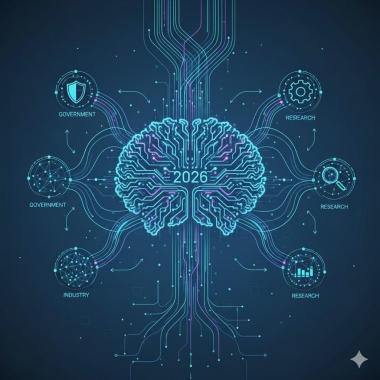
Threat Intelligence Sharing Networks Evolution 2026
The cyber landscape of 2026 is marked by one defining shift: collaborative intelligence. As cyber threats become increasingly complex, decentralized, and machine-driven, individual organizational defenses are no longer sufficient. Attackers exploit automation, Artificial Intelligence (AI), and cross-border coordination to execute advanced intrusions. To...
Machine Learning in Threat Prediction 2029
As enterprises move deeper into the digital frontier, threat prediction powered by machine learning (ML) has become a central pillar of modern cybersecurity. By 2029, global organizations will rely on autonomous models that can detect, analyze, and prevent security threats before they occur. The rise of generative...
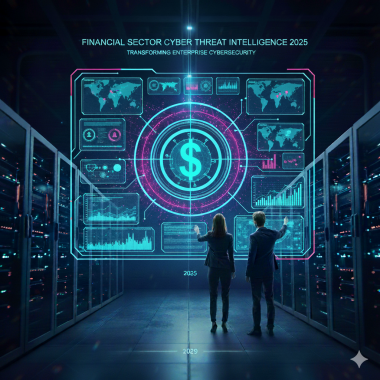
Financial Sector Cyber Threat Intelligence 2025
In 2025, the financial industry stands at the epicenter of digital warfare. With global economies running on data, networks, and instant payments, banks and financial service providers have become prime targets for sophisticated cyber adversaries. Hackers, nation‑state actors, and criminal syndicates are refining tactics to steal data, exploit...

Hybrid Cloud Threat Detection Systems 2026
In the hyper-connected digital economy of 2026, enterprises are increasingly reliant on hybrid cloud infrastructure ecosystems that blend public cloud scalability with private cloud control. But as the hybrid model expands, so does the attack surface, exposing organizations to new, complex, and rapidly evolving cyber threats. From data...
AI Models for Predictive Cyber Defense 2026
The year 2026 marks a turning point in cyber defense architecture. Enterprises no longer rely solely on traditional firewalls and incident response teams; instead, they are embracing AI-powered predictive models to anticipate and neutralize threats before they occur. Predictive cyber defense represents the perfect synthesis of artificial...

Government and Defense Cyber Threat Intelligence 2029
In the emerging digital battlefield of 2029, cyber threat intelligence (CTI) has evolved into one of the most decisive pillars of national power and defense strategy. As global governments and defense agencies digitize every layer of critical infrastructure from command networks to logistics chains, threat landscapes have become exponentially...
No posts found
Write a review