- 3/8, North Pirerbag
- 60 Feet Main Road
- Mirpur, Dhaka 1216
- +880-967-8247365
- support@informatix.systems

Byzantine Fault Tolerance (BFT) in blockchain.
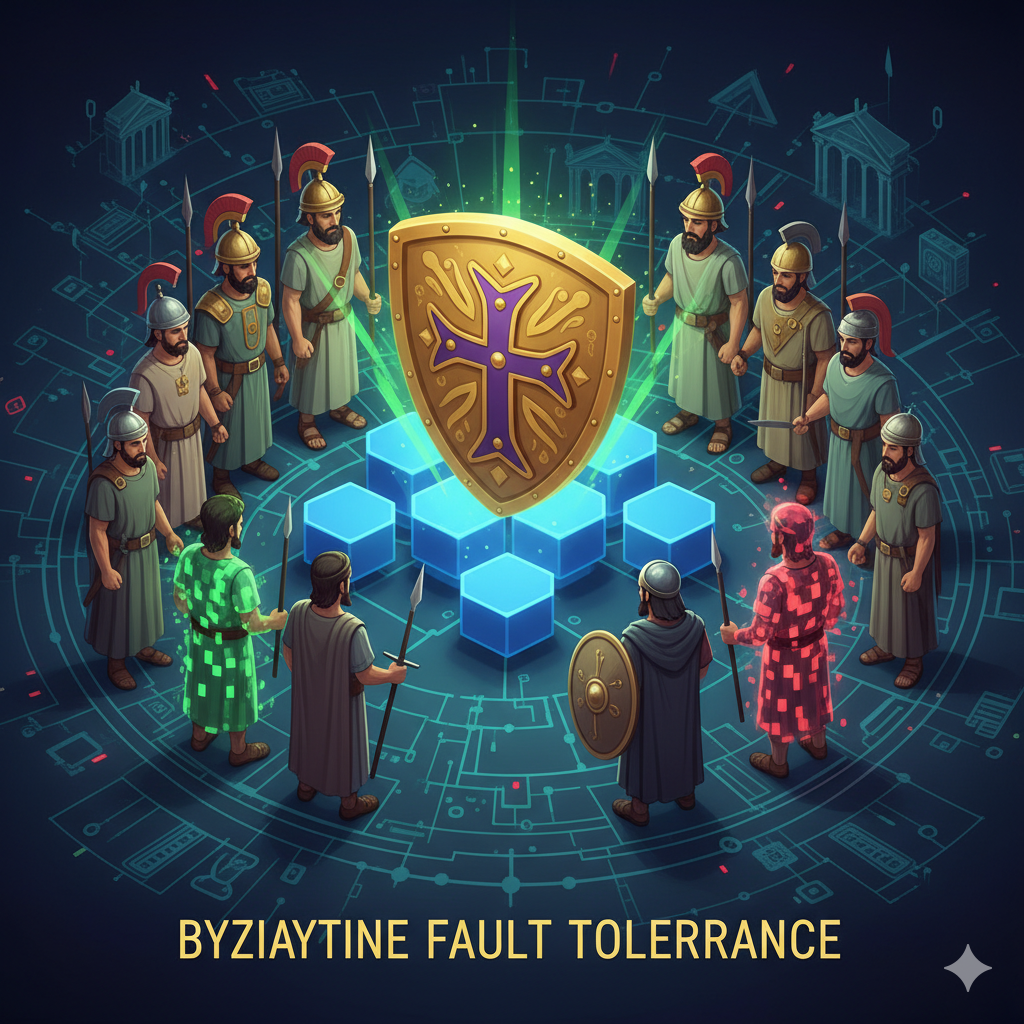
In the decentralized world of blockchain networks, security and reliability are critical. One of the foundational principles that ensures consensus despite faulty or malicious actors is Byzantine Fault Tolerance BFT. At Informatix Systems, we help businesses implement BFT-powered blockchain architectures to maximize trust, resilience, and operational continuity in distributed environments.
What is Byzantine Fault Tolerance BFT
Byzantine Fault Tolerance is a property of a distributed system that allows it to reach consensus even if some of the nodes fail or act maliciously. It gets its name from the Byzantine Generals Problem, where parties must agree on a strategy without trusting each other fully, and despite some of them possibly being traitors.
In the context of blockchain, BFT ensures that all honest nodes agree on the same data or transaction history, even when some nodes behave unpredictably or try to spread false information.
Why BFT Matters in Blockchain
Blockchains must be resistant to failures and attacks. BFT-based consensus algorithms provide the following advantages:
-
Tolerate up to one-third of faulty nodes
-
Protect against double-spending and data tampering
-
Enable secure decision-making in unpredictable environments
-
Enhance decentralization without compromising consistency
Types of BFT-Based Consensus Protocols
There are several implementations of BFT in blockchain systems:
-
Practical Byzantine Fault Tolerance PBFT) is commonly used in permissioned blockchains where participants are known and trusted to some degree.
-
Tendermint BFT is a fast and secure consensus used in many modern blockchain frameworks such as Cosmos.
-
HotStuff A more recent BFT protocol used by Facebook’s Libra, now Diem blockchain.
-
RBFT and DBFT Variants that enhance throughput or introduce delegation to improve scalability.
Key Benefits of BFT for Blockchain Applications
Enhanced Security
BFT algorithms are designed to withstand internal threats such as malicious validators and system crashes.
High Availability
Even if some nodes fail, the system continues to operate and maintain consistency across the network.
Fast Finality
Unlike proof-based systems, BFT protocols can achieve transaction finality in seconds without forks or delays.
Lower Energy Usage
BFT does not require mining or staking, making it an eco-friendly and resource-efficient consensus option.
Enterprise Friendly
BFT is ideal for permissioned blockchain environments in finance, healthcare, logistics,s and government systems.
BFT Blockchain Services by Informatix Systems
At Informatix Systems, we offer a complete range of services to help businesses adopt and implement BFT-powered blockchain systems.
-
Blockchain Architecture Design: We assess your goals and recommend the best BFT-based protocol for your private or consortium network.
-
BFT Consensus Implementation: Our team sets up and configures BFT protocols such as PBFT or Tendermint on your blockchain infrastructure.
-
Smart Contract Deployment We create and deploy smart contracts that operate seamlessly with BFT consensus environments.
-
Validator Node Configuration: We configure trusted validator nodes that participate in the consensus process with fault tolerance and identity protection.
-
Security Auditing and Maintenance We continuously monitor the health of your BFT-based blockchain to ensure compliance and performance.
Where BFT is Applied
-
Financial Institutions Use BFT to maintain tamper-proof ledgers with high trust and low latency.
-
Healthcare Store and share patient data securely with full accountability among known participants.
-
Supply Chain Management: Ensure transparency and fault-tolerant tracking of goods from origin to delivery.
-
Government Systems enable inter-agency collaboration and data integrity across digital governance applications.
FAQ
What is the main benefit of BFT over Proof of Work or Proof of Stake?
BFT provides faster consensus, lower energy usage,e and better fault tolerance, especially in private or consortium blockchain environments.
How many faulty nodes can BFT handle?
Most BFT algorithms can tolerate up to one-third of the total validator nodes being faulty or malicious.
Is BFT good for public blockchains?
While BFT is mostly used in permissioned or semi-permissioned networks, it can be adapted for public chains with proper modifications.
Can BFT prevent double-spending?
Yes, BFT consensus ensures a single agreed transaction history, eliminating risks of double-spending.
Does Informatix Systems support hybrid BFT models?
Yes, we offer custom blockchain solutions that combine BFT with other consensus mechanisms for enhanced scalability and control.
Get in Touch
Looking to implement a secure and fault-tolerant blockchain platform? Connect with the experts at Informatix Systems today.
Informatix Systems
Website: https://informatix.systems
Email: support@informatix.systems
Phone: +8809678247365
Let me know if you’d like metadata and tags for this article.
No posts found
Write a review